
Future Streets Designed for People, Not Just Cars, Focus on Life-Centric Urban Planning
In an era where urban landscapes are rapidly evolving, Philadelphia stands at the forefront of innovative street design and management. Streets account for approximately 30% of the city’s land, yet they predominantly serve a singular purpose: the movement and storage of vehicles. This traditional approach overlooks the potential of streets as dynamic public spaces. A recent initiative seeks to transform this perspective by exploring how streets can adapt to the varying needs of neighborhoods throughout the day, season, and community events.
The pilot project known as “The Chinatown Stitch,” developed by the Office of Transportation and Infrastructure Systems in collaboration with state and federal partners, aims to rejuvenate a community historically fragmented by transportation infrastructure. Central to this initiative is a movable market stall, designed to function both as a vendor kiosk and a gathering place for residents. Scheduled to debut next month, this installation symbolizes a shift toward a more flexible understanding of urban spaces.
During significant community events, such as the Chinese New Year, the market stall draws crowds, shifting from a stationary structure to an inviting plaza that occupies the roadway. This adaptability underscores the concept of a “Flexible Street Strategy,” which positions streets as living systems that can respond to the community’s daily rhythms.
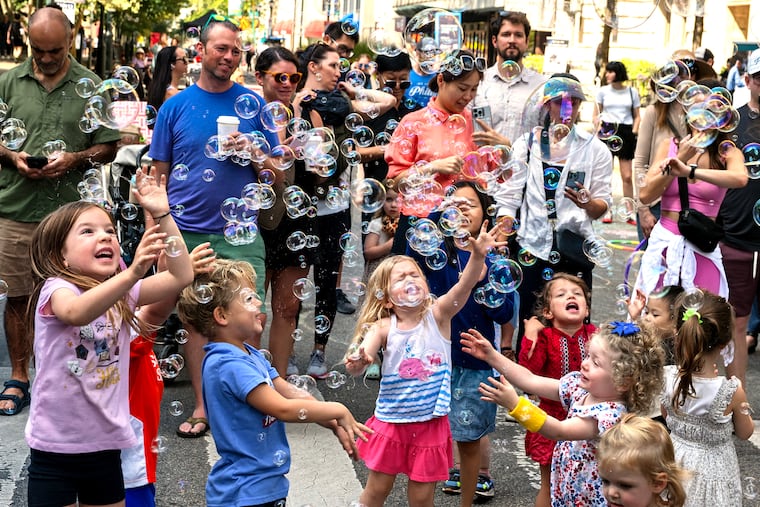
Traditionally, urban planning has adhered to rigid classifications: sidewalks are for pedestrians, lanes are for cars, and curbs are for parking. However, the flexible street model challenges this framework by asking, “When should a street prioritize vehicles, and when should it serve the public?” This paradigm shift has already been evidenced by the city’s Open Streets initiative in Center City, where designated blocks close to vehicular traffic on Sundays, transforming the streets into vibrant spaces for community interaction.
The success of such initiatives has been profound. Research indicates that as foot traffic increases, businesses flourish, creating an environment where families and children once again feel safe and welcome in the streets. Observational data revealed a staggering increase in children’s presence during Open Streets events, highlighting the significance of accessibility and enjoyment in urban spaces.
Despite initial skepticism surrounding the Open Streets program, city agencies have embraced the concept, recognizing that streets are vital for civic engagement rather than mere conduits for cars. The renewed understanding of streets as central to community life has sparked plans to expand successful pilot programs further across downtown Philadelphia.
However, the vision for flexible streets requires systemic change. Current regulations often constrain innovative uses of public spaces. Therefore, cities must adapt their frameworks to recognize streets as versatile environments that can be repurposed in real-time based on community needs, culture, and dynamics.
Advancements in technology offer promising solutions for this transformation. By utilizing digital tools and data analytics, urban planners can identify optimal times for streets to transition from vehicular to pedestrian use, ensuring minimal disruption while maximizing community benefit.
The essence of the flexible street model is not necessarily in constructed infrastructure but rather in harnessing imagination, data, and community engagement. It empowers cities to test and adapt in low-cost, low-risk ways, further promoting streets as centers of public life.
Ultimately, this vision fosters interconnectedness within urban communities, emphasizing the importance of creating public spaces that belong to everyone. As cities face challenges such as climate change and shifting population dynamics, the need for flexible urban infrastructure becomes increasingly critical. The future of urban streets is not merely about facilitating movement; it is about nurturing vibrant community life, epitomizing the need for adaptability in urban design.
For those seeking a more inclusive urban experience, the imperative is clear: streets should be reimagined to allow communities to thrive in both structure and spirit.


