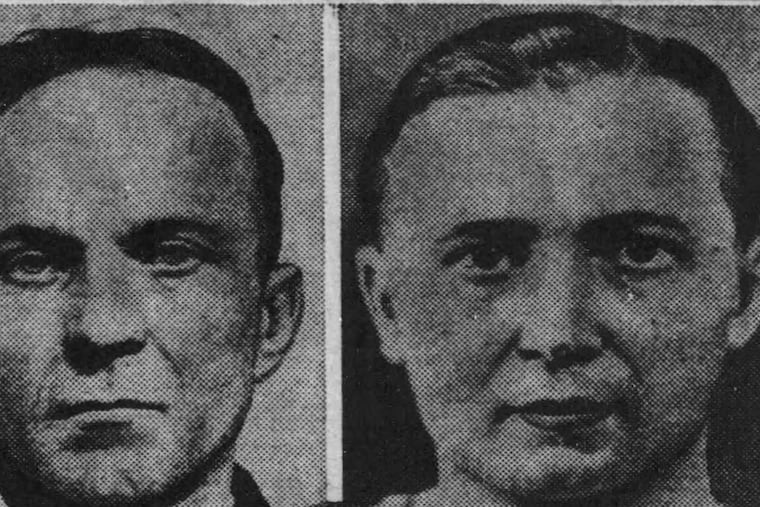
Gangster avoids capture at mother’s house during this week in Philadelphia history.
In an audacious escape that reverberated through the annals of crime in the United States, Elizabeth Mais engaged in an act of maternal desperation that enabled her son and a fellow gangster to break free from incarceration. This incident, which unfolded in late September 1934, saw Elizabeth conceal firearms within cans of baked chicken, meticulously wrapping them and delivering the package to her son, Robert H. Mais, who was serving time in a Richmond, Virginia prison.
Bobby Mais, along with his accomplice Walter Legenza, subsequently executed a dramatic jailbreak on September 29, 1934, utilizing the concealed weapons to overpower their captors. Following their escape, the duo became infamously recognized as the “Dillingers of the East,” a moniker referring to the notorious bank robber John Dillinger, and quickly made their way to Philadelphia, launching a spree of criminal activity.
Robert H. Mais, often described as a “mama’s boy,” bore a tattoo that poignantly depicted a pierced heart with the inscription “Mother” on his left forearm. Despite this familial attachment, he was deeply entrenched in a life of crime, playing a pivotal role in the infamous Tri-State Gang. This group was notorious for its thefts and violent escapades across the Northeastern United States, particularly during the tumultuous era of Prohibition and the Great Depression.
Legenza, the Polish-born lieutenant of Mais, was identified as a cold-blooded killer with a violent past. As the fall of 1934 approached, however, both men faced impending execution by electric chair for their involvement in the murder of a Federal Reserve truck driver during a robbery in Richmond earlier that year.
Following their prison break, Mais and Legenza’s whereabouts became precarious. On October 14, 1934, Philadelphia patrolmen observed activity at the home of Elizabeth Mais, leading to their attempted capture. However, the two gangsters managed to elude arrest, disappearing into the night even as law enforcement swarmed the area.
The pursuit concluded in January 1935 when the fugitives were apprehended in New York, just before they were set to embark on another criminal venture. Robert Mais, then 29, along with the 41-year-old Legenza, was ultimately executed in Virginia’s electric chair on February 2, 1935. Their criminal saga has since been immortalized in various forms of media, including film, television, and comic books, exemplifying an era marked by both lawlessness and intrigue. Meanwhile, Elizabeth Mais faced the legal repercussions of her actions, serving time herself for her role in facilitating the escape of her son.
This remarkable story sheds light on the complexities of familial loyalty amidst the harsh realities of a life steeped in crime, leaving a lasting legacy that resonates in American cultural memory today.
Media News Source