
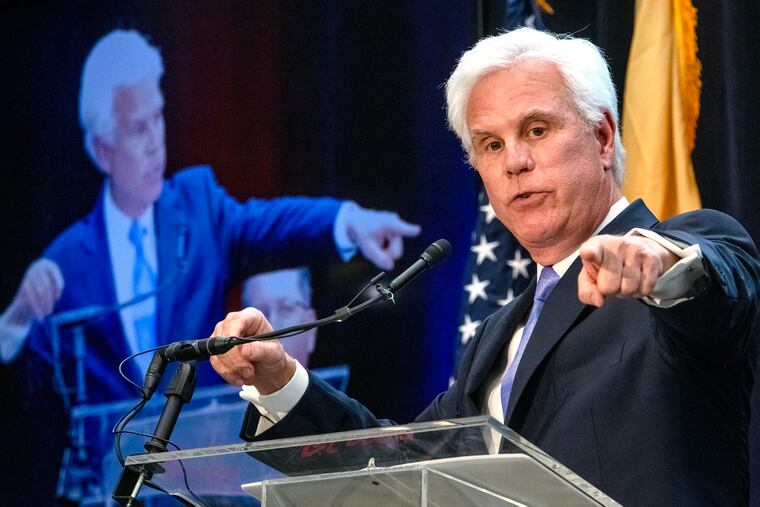
George Norcross appeals court decision supporting dismissal of racketeering charges against him.
In a pivotal legal confrontation, prominent Democratic figure George E. Norcross III has urged a New Jersey appeals court to uphold a lower court’s dismissal of criminal racketeering charges against him. This appeal arrives in the wake of significant allegations from state prosecutors who claim that Norcross orchestrated economic coercion to secure valuable property on the Camden waterfront.
In February, Mercer County Superior Court Judge Peter Warshaw dismissed a 13-count indictment against Norcross and five co-defendants, ruling that the state’s claims did not satisfactorily constitute extortion. This decision represented a significant setback for New Jersey Attorney General Matthew J. Platkin, who accused Norcross of leveraging economic threats to compel a developer and a nonprofit organization to yield their property rights, ultimately benefiting from millions in tax credits.
Norcross, 69, has an extensive background in South Jersey’s political landscape, serving not only as a longtime leader of the Democratic Party but also holding prominent positions such as chairman of Cooper University Health Care in Camden and executive chairman of Conner Strong & Buckelew, an insurance brokerage firm.
In response to the dismissal, Platkin, an appointee of Governor Phil Murphy, sought to reverse the ruling, arguing that the trial judge’s decision failed to adequately consider evidence presented to the grand jury that led to the indictment. This evidence purportedly highlighted attempts to manipulate the property transaction process in an illicit manner.
Norcross’s legal team contends that the indictment demonstrates mere tough negotiation tactics permissible within a business context. They argue that the charges are also subject to the statute of limitations. In court filings, Norcross’s attorneys articulated that the indictment lacks evidence of violence or unlawful threats, instead depicting standard business negotiations between experienced entities.
Moreover, it’s important to note that federal prosecutors in both New Jersey and Philadelphia previously opted not to pursue charges against Norcross, raising questions about the validity of the state’s case. In their opposition filings, New Jersey prosecutors criticized the trial court’s approach, asserting that no precedent supports the dismissal of such charges based on the criteria applied in this instance.
The co-defendants listed alongside Norcross include his brother, Philip Norcross, various legal and political figures, and local businessmen, all of whom are facing the same allegations. Support for Norcross’s position has come from multiple third parties, including organizations such as the New Jersey NAACP State Conference and the New Jersey AFL-CIO, reinforcing the argument that the case may reflect broader political dynamics rather than definitive corrupt practices.
As the appeal process unfolds, the case continues to highlight the intersections of politics, business, and legal accountability within the context of New Jersey’s governance. Media News Source will follow developments in this high-profile legal battle closely.


