Hoboken achieves 8 years without traffic fatalities; can Philadelphia emulate this safety record?
Hoboken, New Jersey, has emerged as a model for urban traffic safety, making headlines for its remarkable achievement of zero traffic fatalities since 2017. This statistic positions Hoboken as a prominent participant in the Vision Zero movement, which originated in Sweden three decades ago with the ambitious goal of eliminating traffic deaths altogether. The city’s compact structure, home to approximately 60,000 residents within a mere one square mile, contributes to its focus on pedestrian safety and responsible driving behavior.
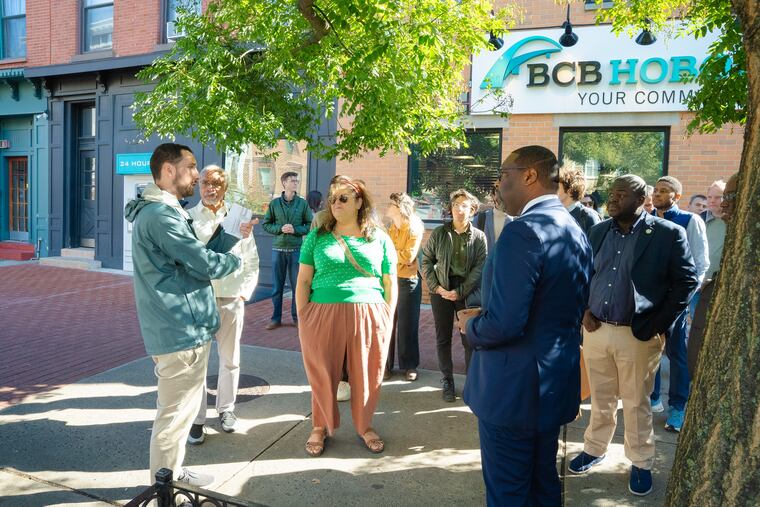
Recently, a group of stakeholders from Philadelphia, including City Council members and safety advocates, visited Hoboken to observe its traffic safety measures firsthand and gather insights from municipal leaders. The experts in Hoboken have garnered attention from mayors in cities such as Boston and San Francisco, eager to learn from its successful strategies.
Integral to Hoboken’s traffic safety strategy is the practice of “daylighting.” This technique involves removing street parking near intersections to enhance visibility for both drivers and pedestrians. The city has introduced dedicated bicycle lanes that circle the urban area, with varying levels of protection provided for cyclists. Additionally, Hoboken has widened curbs and installed “bump outs” at pedestrian crossings, thereby reducing the distance pedestrians need to cover while crossing streets.
Hoboken’s innovative infrastructure is further complemented by its integration of traffic safety measures with urban parks, schools, and resiliency projects, such as rain gardens that mitigate flooding risks in the area. Coordination among over six city departments, meeting weekly to discuss ongoing projects and safety improvements, plays a critical role in ensuring the effectiveness of these initiatives.
Christopher Gale, the executive director of the Greater Philadelphia Bicycle Coalition, emphasized the critical cultural shift that has occurred in Hoboken, where citizens actively hold one another accountable for safe driving practices. This engagement reflects a broader civic commitment to traffic safety, particularly among families advocating for the well-being of children.
In stark contrast, Philadelphia recorded 134 traffic-related fatalities in the last year, with 59 involving pedestrians. Stakeholders like Gale propose that Philadelphia should prioritize building safe infrastructure in its most densely populated areas before expanding further afield. Council President Kenyatta Johnson, who has championed new legislation for enhanced road safety, underscores the importance of treating traffic violence with the same urgency as other critical public safety issues.
This burgeoning focus on pedestrian and cyclist safety in both Hoboken and Philadelphia reflects a growing recognition of the need for comprehensive strategies to address traffic-related fatalities. As urban areas continue to grapple with increasing traffic volumes and limited space, the lessons from Hoboken’s Vision Zero implementation may provide a roadmap for other cities aiming to achieve similar successes in reducing traffic deaths.
Media News Source.