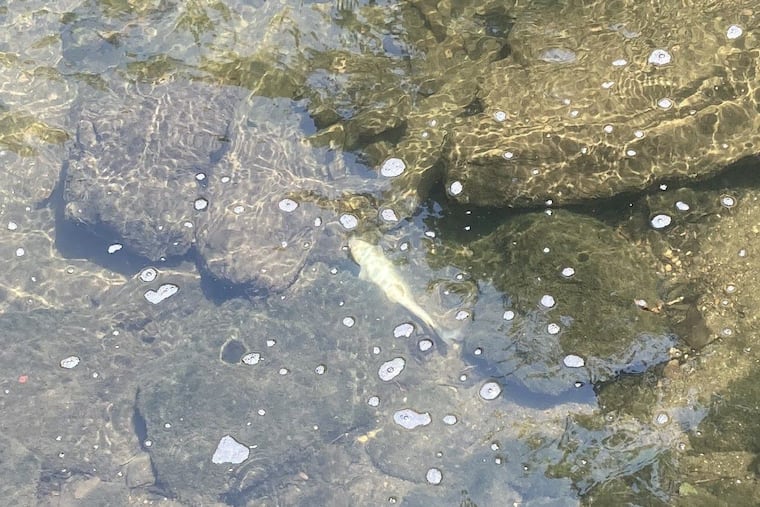
Hundreds of fish found dead in Tacony Creek; illegal dumping being investigated as potential cause.
A notable environmental incident unfolded this week along Tacony Creek in Philadelphia, where a significant number of fish were discovered dead, raising concerns over potential illegal chemical dumping. The incident was first reported on Thursday near the intersection of Adams Avenue and Crescentville Road in the Olney neighborhood. Reports indicated that the fish kill extended south from that location.
Among the deceased marine life found in the creek were various species including bluegill, sunfish, white suckers, mummichog, and shiners. The alarming situation prompted a response from local environmentalist groups, particularly the Tookany/Tacony-Frankford Watershed Partnership. Their executive director, Justin DiBerardinis, noted that signs of life returned to the creek by Friday afternoon, suggesting that the immediate threat might have passed.
Despite the resurgence of live fish, the situation remains concerning, as local children had begun swimming in the creek, seeking relief from the oppressive heat that pushed the heat index to a sweltering 105 degrees. The implications of the fish kill extend beyond mere ecological impact; there are significant public health concerns given the proximity of recreational activities to potentially toxic waters.
DiBerardinis emphasized the need for thorough investigation into the probable causes of the fish deaths. Although definitive conclusions have yet to be drawn, the partnership director highlighted the possibility that hazardous materials could have been dumped illegally into a sewer outfall located just north of the affected area. The creek, bordered by wooded areas and urban structures—including apartments, a shopping center, and a playground—serves as a critical waterway linking urban and natural ecosystems.
He underscored that storm drains in the vicinity channel directly into the creek, raising the likelihood of chemical runoff impacting aquatic life. The executive director expressed skepticism regarding potential contamination from industries located further upstream, given that any pollution would likely have affected a broader area.
DiBerardinis postulated that the chemicals might have originated from a mobile source, possibly dumped from a truck. For law enforcement to pursue charges or further investigations, it would require eyewitness accounts or photographic evidence of the incident.
The Tookany/Tacony-Frankford Watershed Partnership regularly collaborates with authorities to combat illegal dumping in the area. However, capturing violators remains a substantial challenge, and the organization relies heavily on community vigilance and public reporting. The ramifications of the recent fish kill serve as a stark reminder of the delicate balance between urban development and environmental conservation. The public is urged to remain aware and vigilant concerning pollution incidents that could impact local ecosystems and public health.