International Students Play Key Role in Boosting the Innovation Economy
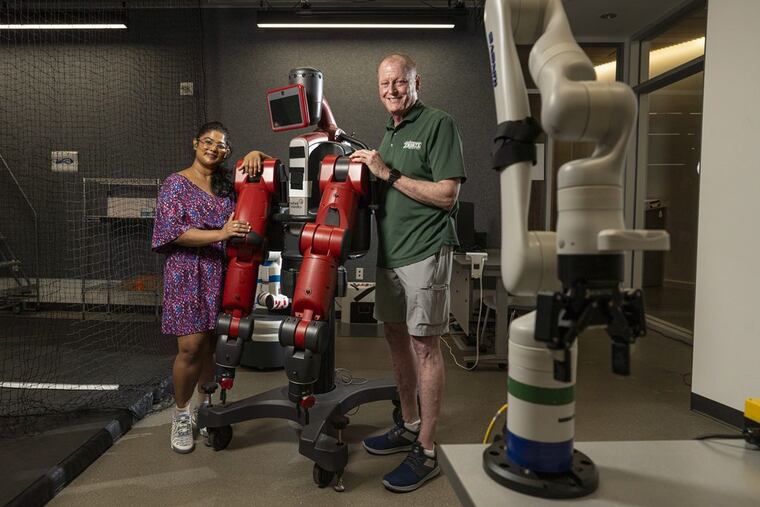
Pittsburgh has emerged as a vibrant technology hub, driven in large part by the contributions of international students. Saisri Akondi, a 28-year-old from India, exemplifies this trend. Not only did she co-found a company in India, but upon arriving at Carnegie Mellon University to pursue a master’s degree in biomedical engineering, business, and design, she co-founded D.Sole. The innovative firm has developed a high-tech insole aimed at detecting diabetes-related foot complications, a serious issue resulting in approximately 6.8 million amputations annually.
D.Sole is one among many technology companies that have taken root in Pittsburgh, which has seen a significant shift from its historical roots in the steel industry to a burgeoning tech sector. According to the Pittsburgh Technology Council, technology firms now employ roughly a fourth of the local workforce and collectively pay out an impressive .5 billion annually in salaries.
The transformation of Pittsburgh into a technological hub has been significantly influenced by the influx of international students like Akondi. Sean Luther, head of InnovatePGH, indicates that these students are vital in driving economic growth through research, innovation, and entrepreneurship. A notable area of this activity is the Pittsburgh Innovation District, strategically situated near both Carnegie Mellon and the University of Pittsburgh.
Despite the recent challenges posed by visa restrictions and funding cuts during the Trump administration, the impact of international students remains profound. They play critical roles in conducting research that leads to commercial applications and are often founders of startups. According to the National Foundation for American Policy, over 143 of the U.S. companies valued at billion or more were initiated by individuals who entered the country as international students. Companies such as SpaceX are prime examples of the entrepreneurial spirit fostered in part by this demographic.
Statistical data show that international students constitute over a third of master’s and doctoral graduates in fields like science and engineering at U.S. universities. Specifically, at Carnegie Mellon, 61% of graduate students hail from abroad. This trend has made Pittsburgh not only a breeding ground for technological talent but also a center for advancements in artificial intelligence and robotics, attracting major players like Google, Apple, and Uber.
Local institutions continue to invest in this ecosystem. For instance, the University of Pittsburgh and Carnegie Mellon have collaborated on initiatives to promote startups, while various tech companies leverage international expertise to propel their operations. A notable example is Duolingo, an education technology firm valued at approximately billion and co-founded by international students.
As the Pittsburgh area looks to the future, maintaining the flow of international students will be crucial. Concerns abound regarding potential declines due to visa processing delays and increased competition from other nations. Local leaders caution that diminishing numbers of international students might hinder economic growth, innovation, and the startup culture that has taken hold since the decline of steel.
The collaborative efforts between universities, local business leaders, and the community underscore the importance of a diverse and skilled workforce. According to recent reports, a significant percentage of graduates remain in the state, contributing to an indispensable talent pipeline in sectors such as biomedical research and advanced manufacturing.
In summary, the interplay between international students and the Pittsburgh economy highlights a dynamic and evolving narrative—one where innovation and entrepreneurship thrive amid global challenges. As the city embraces its new identity, the relationship with its international student population will define its continued success in the technology sector and beyond.