
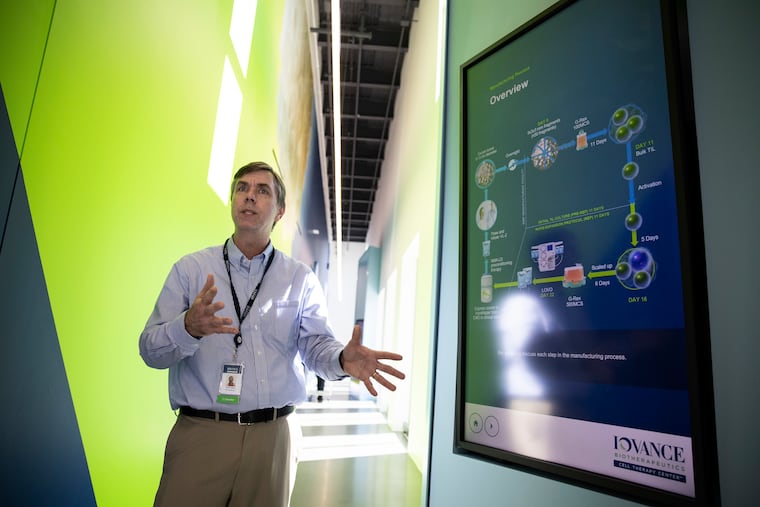
Iovance transforms patient immune cells into therapy at its cell manufacturing facility.
Rusty Konkol, a 71-year-old grandfather battling metastatic melanoma, recently visited Iovance Biotherapeutics’ manufacturing facility in Philadelphia’s Navy Yard, eager to connect with the people behind a therapy that represents a beacon of hope in his struggle against cancer. His trip, motivated by a desire to witness the creation of his treatment—Amtagvi—followed a grim stage IV diagnosis in May 2024. Since receiving this innovative tumor-infiltrating lymphocyte (TIL) therapy, he has gained precious time with his family, including his 17 grandchildren, despite not yet being cancer-free.
Approved by the Food and Drug Administration in early 2024, Amtagvi marks a significant advancement in cancer treatment, directing the patient’s own immune cells to combat advanced melanoma that cannot be surgically removed. This pioneering approach is part of a broader trend, with Philadelphia emerging as a hub for such therapies, a consequence of a rich local talent pool and historical advances in cell therapy.
Iovance, headquartered in California, strategically chose Philadelphia for its manufacturing facility, which has been operational since 2021 and employs approximately 600 individuals. The city has garnered recognition as “Cellicon Valley,” reflecting its contributions to cutting-edge cell therapies, including CAR-T treatments. This appeal has attracted considerable investment from other pharmaceutical giants, including Johnson & Johnson, which announced a billion investment in a cell therapy manufacturing plant in Montgomery County, further solidifying the region’s role in life sciences.
Nevertheless, the complexities associated with individualized cell therapies can make them prohibitively expensive. The manufacturing costs for Amtagvi remain undisclosed, but the therapy’s list price currently stands at 3,000. Such high costs are not uncommon in the field, where treatments like CAR-T have exceeded 0,000, posing challenges to broad accessibility.
The manufacturing process of Amtagvi is intricate, taking approximately 34 days from tumor removal to therapy preparation. A part of the patient’s tumor is extracted by a surgeon and transported to Iovance’s facility, where it undergoes a series of carefully controlled processes ensuring cell growth and purity. Once completed, the enhanced immune cells are reintroduced into the patient’s system, where they aim to eliminate cancer cells effectively.
The urgency of these treatments is underscored by the desperate circumstances many patients face. Konkol’s family utilized their connections and knowledge to advocate for his participation in this new therapy, which had recently demonstrated promising results in clinical trials. After initially undergoing chemotherapy to prepare his body for treatment, Konkol was administered Amtagvi in January 2025. His subsequent scans revealed significant tumor reduction, allowing him to enjoy more moments with his family and contribute to the care of his young grandchild.
As such therapies advance, they continue to offer renewed hope for patients like Konkol in the fight against cancer. The commitment to rapidly bring these innovations to market remains a central focus for companies like Iovance, ensuring that patients receive timely interventions in their health battles.


