Jimmy Lai, former Hong Kong pro-democracy media mogul, found guilty in significant national security trial.
In a significant ruling that could have far-reaching implications for press freedom and political dissent in Hong Kong, Jimmy Lai, a prominent pro-democracy media mogul, has been convicted of serious national security offenses. The 78-year-old founder of the now-defunct newspaper “Apple Daily” was found guilty by a panel of three judges on charges of conspiring with foreign forces to undermine national security and of publishing seditious materials. Lai has consistently pleaded not guilty to all charges leveled against him.
Lai’s arrests began in August 2020, under a Beijing-imposed national security law, which came into effect after widespread anti-government protests in 2019. Since then, he has been held in custody, often in solitary confinement, and has suffered a notable decline in health during his imprisonment.
The court proceedings, closely monitored internationally by observers from the United States, the United Kingdom, and the European Union, were seen as a vital indicator of Hong Kong’s media independence and judicial integrity since its return to Chinese sovereignty in 1997. During the trial, which took place over 156 days without a jury, prosecutors focused on Lai’s alleged collaborations to solicit foreign sanctions against Hong Kong and China, particularly highlighting meetings he held with former U.S. officials, including Vice President Mike Pence.
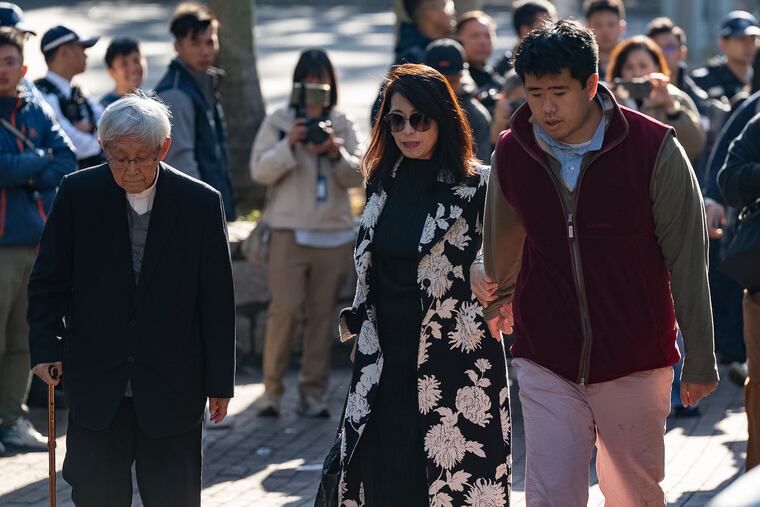
Lai’s family expressed disappointment but not surprise at the verdict, emphasizing their belief in his innocence. They asserted that the process reflects the weaponization of the national security law against individuals who oppose the government. In the ruling, Judge Esther Toh stated that the evidence presented was compelling, claiming Lai had engaged in activities aimed at destabilizing the Chinese Communist Party to the potential detriment of the residents of Hong Kong.
As Lai awaits sentencing, which could be as severe as life imprisonment for the collusion charge, the implications of this decision resonate beyond Hong Kong. It raises pertinent questions surrounding the future of free speech, the role of the legal system in safeguarding such rights, and the international community’s response to increased authoritarian measures in the region.
International condemnation swiftly followed the verdict, with UK officials denouncing the trial as politically motivated and human rights organizations criticizing it as a strategic blow to press freedom. The Chinese Foreign Ministry, however, defended the verdict, calling for respect toward Hong Kong’s judicial system while U.K. officials reaffirmed their commitment to advocating for Lai’s release.
Lai’s fate is poised to influence not only the media landscape in Hong Kong but also future diplomatic interactions between Beijing and international governments. As governments and rights groups continue to react to this significant ruling, the case will likely remain a focal point in discussions on the deterioration of civil liberties in the region.
As the world looks on, the true impact of Lai’s conviction remains to be seen, both for Hong Kong’s political climate and the future of dissent in environments where speaking out against the state is increasingly perilous.