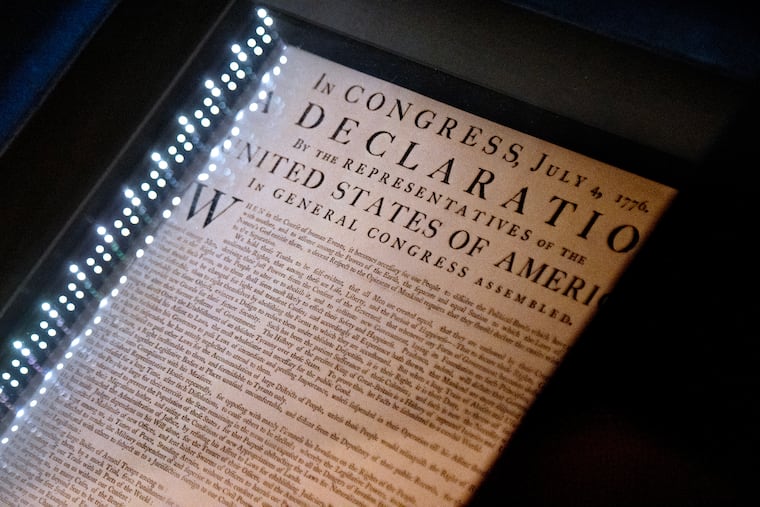
John Dunlap’s Old City print shop seeks blue historical marker before July 4 celebration.
On July 4, 1776, one of the most significant printing jobs in American history occurred in Philadelphia, specifically at the corner of Second and High Streets. Here, John Dunlap, an Irish immigrant and publisher of the Pennsylvania Packet, produced the first printed copies of the Declaration of Independence. Despite the monumental importance of this moment, there exists no Pennsylvania Historical Marker to commemorate the exact location where the Declaration was first disseminated, an oversight that calls for rectification as the nation approaches the 250th anniversary of its independence.
Dunlap’s role was pivotal; Congress, under the leadership of John Hancock, recognized the urgency of spreading the declaration to garner support for a revolution that faced numerous challenges. Following a series of military setbacks, the Continental Army required strong international backing, particularly from France, to assist in its struggle against British control. Independence had to be publicly declared and communicated swiftly to rally the colonies.
On the afternoon of July 4, Thomas Jefferson delivered the freshly endorsed document to Dunlap. Urging immediate action, Jefferson requested several hundred copies to be printed for distribution. Dunlap and his team worked tirelessly throughout the night to produce multiple batches of “broadsides.” Some of these broadsides were printed on paper that bore the watermark of King George III, reflecting the historical context in which they were produced. Due to the time constraints, some copies exhibited minor printing errors, and many were folded while the ink was still wet, leading to offset imprints that testify to the hurried nature of their creation.
The newly minted copies were promptly delivered back to Congress, where dispatch riders took them to colonial assemblies and military forces. General George Washington received his copy on July 9, promptly arranging for it to be read aloud at his Manhattan headquarters. The distribution of the remaining broadsides spanned several weeks, with the final ones reaching Savannah, Georgia, by August 10.
To date, the exact number of Dunlap broadsides printed remains unknown, but only 26 originals have survived, making them coveted artifacts of American history. The last known auction of a Dunlap broadside took place in 2000, fetching million—a sum equivalent to approximately million when adjusted for inflation. Most surviving copies reside in museums or universities and attract considerable public interest whenever displayed.
Interestingly, a plaque commemorating this historic site was installed by the Society of Professional Journalists 50 years ago. However, its location near a derelict diner at Market and Second Streets ensures that it goes largely unnoticed by the general public.
Given the imminent 250th anniversary of American independence, there is a pressing need for the city or state to initiate the erection of a proper historical marker at this vital site. This effort would serve not only to honor the legacy of the Declaration of Independence but also to acknowledge a moment that continues to resonate globally. Establishing such a marker before July 4 would constitute a necessary and fitting tribute to the foundational events that shaped the nation.
Media News Source