
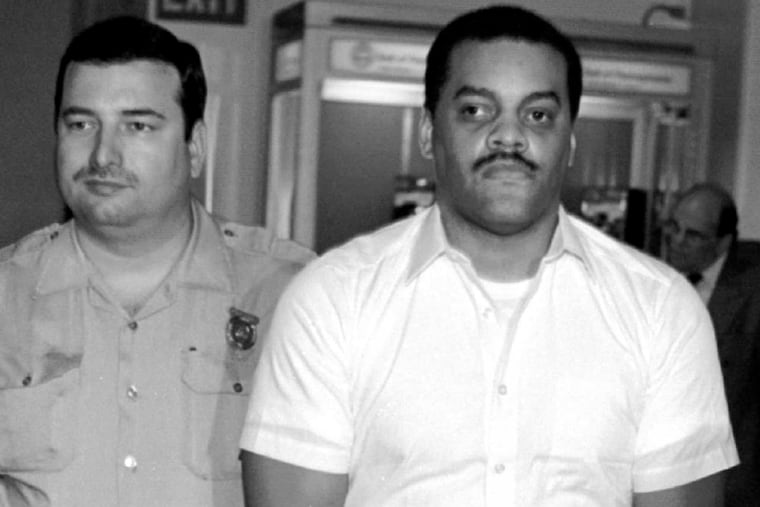
Judge vacates 1995 conviction of Drexel guard previously accused of killing student over sneakers.
At a recent hearing in Philadelphia, a significant development emerged in the case of David Dickson, who had been convicted for the 1984 murder of Drexel University student Deborah Wilson. Over the course of nearly three decades, concerns surrounding prosecutorial misconduct and reliance on questionable testimony had loomed over Dickson’s conviction, which was ultimately overturned by Judge Jennifer Schultz of the Philadelphia Common Pleas Court.
Dickson, now at the age of 65, entered what is termed an Alford plea to charges of third-degree murder and robbery, while maintaining his innocence. This legal maneuver allows defendants to plead guilty while not admitting to the criminal act. The courtroom was filled with family members including siblings and nieces, whose presence underscored the emotional weight of this moment as they sought both justice and closure. For many, the immediate goal was not just to clear his name but to reunite once again as a family.
The legal journey surrounding Dickson’s case brings to light troubling aspects of the prosecutorial practices employed at the time, particularly by former prosecutor Roger King, who has been linked to multiple cases ultimately overturned due to misconduct. Investigations have revealed that King was involved in manipulating evidence and pressuring witnesses, while also presenting dubious theories about the motive behind Wilson’s murder. Initial contention suggested that the crime was related to Dickson’s supposed martial arts skills, and an alleged obsession with sneakers.
These sensational claims were primarily bolstered by testimonies from jailhouse informants, particularly John Hall, who later faced scrutiny for providing unreliable information across several murder cases in Philadelphia. After his death, it came to light that Hall had fabricated numerous testimonies, and evidence was withheld that could have exonerated Dickson long before now.
While Dickson’s conviction has been overturned, the implications extend to Wilson’s family, who are left grappling with a tragedy that remains unresolved almost four decades later. Nancy Hughes, Wilson’s sister, articulated the profound impact of the case on her family, emphasizing the duality of their grief and the comfort that Dickson’s conviction had provided them for years. Yet, the pursuit of truth and justice remains elusive.
Dickson’s case highlights broader issues within the judicial system, particularly the consequences of prosecutorial misconduct and the fragility of justice for defendants. As he embarks on a new chapter in his life, having secured an immediate release from state prison, the echoes of his past continue to linger, showing the deep scars left by a flawed judicial process.
In support of Dickson’s plea agreement, his attorney noted the emphasis on his clean prison record and health concerns, suggesting that time is of the essence as he navigates life after incarceration. As this case unfolds, it serves as a reminder of the complexities of the American judicial system and the ongoing struggle for justice.
This landmark development in Philadelphia exemplifies the challenges faced in addressing wrongful convictions and the ongoing quest for truth amidst a complicated legal landscape.


