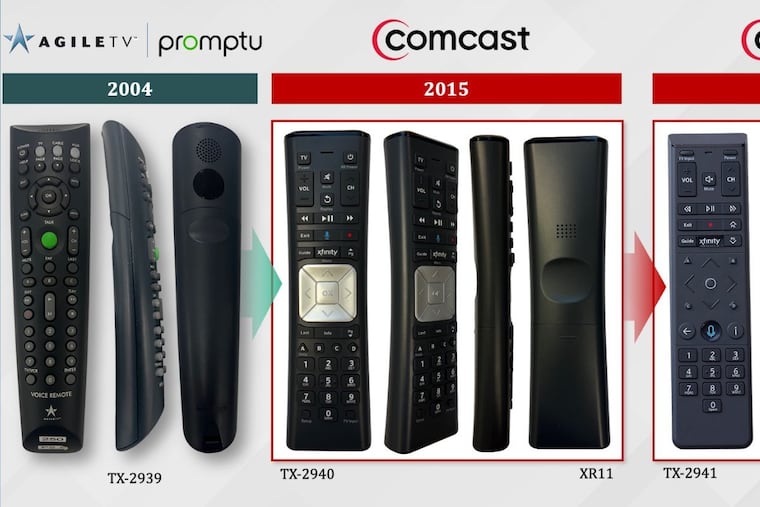
Jury rules Comcast must pay 0 million to start-up for unauthorized use of voice-remote technology.
In a recent legal ruling, Comcast Corporation has been ordered to pay 0 million to Promptu Systems Corporation for patent infringement regarding a voice-activation feature in television remote controls. The verdict emerged from a trial in the Eastern District of Pennsylvania, where a federal jury determined that Comcast had indeed violated two patents owned by Promptu, although only one of the patents was deemed valid.
Promptu Systems, which claims to have “pioneered” the technology that enables users to control their televisions via voice commands through a remote control in the early 2000s, filed the lawsuit following Comcast’s 2015 launch of its voice remote. The lawsuit alleged that Comcast had used technology patented by Promptu without authorization, despite the fact that the telecommunications giant had expressed interest in collaborating on this technology as early as 2001.
The jury’s decision followed a six-day trial, concluding within three hours of deliberation. Promptu initially sought 6 million in damages, based on an estimated owed payment of 30 cents per month for each Comcast cable subscriber over the past decade. However, the jury ultimately awarded Promptu 0 million as compensation for the infringement.
Despite the verdict, Comcast maintains that the outcome will have no bearing on its customer base. A spokesperson for the company indicated that it intends to challenge the decision, asserting that the patents in question are expired and therefore unenforceable. Comcast has a history of contesting the validity of the patents throughout the decade-long litigation process.
The arguments presented during the trial revealed contrasts between the two parties. While Promptu’s representatives claimed that its technology had been exploited over a lengthy period, Comcast sought to undermine the significance of the patents, arguing that Promptu had failed to establish itself as a significant player in the remote control market.
This case highlights the complexities surrounding intellectual property rights and technology innovation, particularly in the rapidly evolving realm of consumer electronics. Comcast’s voice-activated remotes have grown to serve millions of its subscribers, illustrating the increasing importance of such features in enhancing user experience.
As the company navigates this legal setback, it also faces broader challenges, including declining cable subscriptions and the necessity to retain customer loyalty amid an increasingly competitive landscape. Recent reports indicate Comcast’s customer count has dropped to 11.2 million, even as its streaming service, Peacock, reported a 22% growth in paid subscribers. The firm is simultaneously involved in other legal matters, including a 7.5 million settlement related to a data breach that had impacted numerous customers.
The outcome of the Promptu case may not only influence Comcast’s financial landscape but also serve as a pivotal point in the discussion of innovation rights and corporate accountability in the technology sector.
Media News Source