
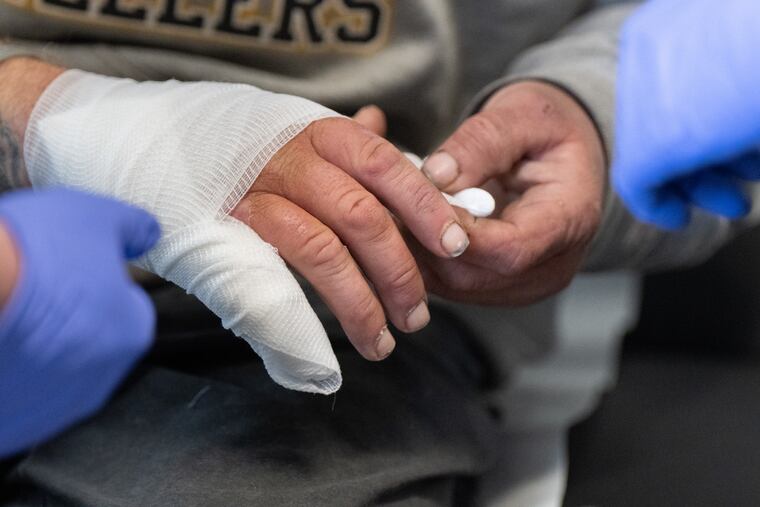
Kensington Wound Care Clinic Provides Specialized Treatment for Patients.
In a small clinic room at the Mother of Mercy House on Allegheny Avenue in Kensington, patients facing serious medical challenges receive essential care. Emma Anderson, an EMT and student at St. Joseph’s University, recently encountered Steven, a man with a severely swollen hand, during a routine wound care session. The need for specialized medical attention has grown increasingly evident as the city grapples with the ramifications of xylazine, an animal tranquilizer that has been linked to severe skin lesions on opioid users and, in some cases, necessitates amputation.
Steven’s visit marks his second to the clinic, which operates twice weekly to provide wound care for individuals dealing with the devastating effects of xylazine. Originally intended solely as a veterinary medication, xylazine has been illicitly introduced to the fentanyl supply on the streets, exacerbating the already dire opioid crisis that has claimed many lives in Philadelphia. Since the drug surfaced within the last five years, the rate of amputations among opioid users in the city has more than doubled, a stark reflection of the widespread impact of this crisis.
Despite a noted decrease in xylazine-related emergencies in area hospitals over the past year, the situation remains precarious. Steven, who previously worked as an EMT, shared his concerns about the deteriorating conditions he has witnessed on the streets, including individuals suffering from open, gaping wounds. In his experience, smoking fentanyl—rather than injecting it—was believed to lower the risk of such severe skin infections, a misconception that he now realizes was incorrect as he faced his own health challenges.
The Mother of Mercy House, founded in 2015, collaborates with St. Joseph’s Institute of Clinical Bioethics to extend its resources in response to an overwhelming need for wound care in the Kensington area. The clinic not only aims to provide immediate care but also fosters deeper relationships with patients, a crucial element in building trust as many avoid traditional healthcare due to past experiences.
With efforts amplified this year, the clinic has increased its operating hours and expanded outreach strategies, including monthly street visits equipped with vital supplies. These initiatives aim to connect patients with necessary resources, ranging from housing assistance to rehabilitation programs. Nevertheless, healthcare professionals working at the clinic face ongoing challenges, as many patients experience apprehension about institutional healthcare settings, often resulting in delayed medical attention during critical moments.
The changing landscape of the local drug supply has introduced new complications, with medetomidine—another animal tranquilizer—emerging this year. Current data suggests a decline in cases of soft-tissue damage linked to opioids; however, the full impact of this shift on patients remains unclear.
As winter approaches, concerns about worsening skin conditions due to frigid temperatures complicate the already intricate dynamics of care. Staff members remain vigilant, aware that disrupted access to the clinic can exacerbate health conditions among the most vulnerable populations. The commitment of volunteers and medical professionals to provide compassionate care underscores the urgent need for a multifaceted approach to this deepening crisis in Kensington and beyond.


