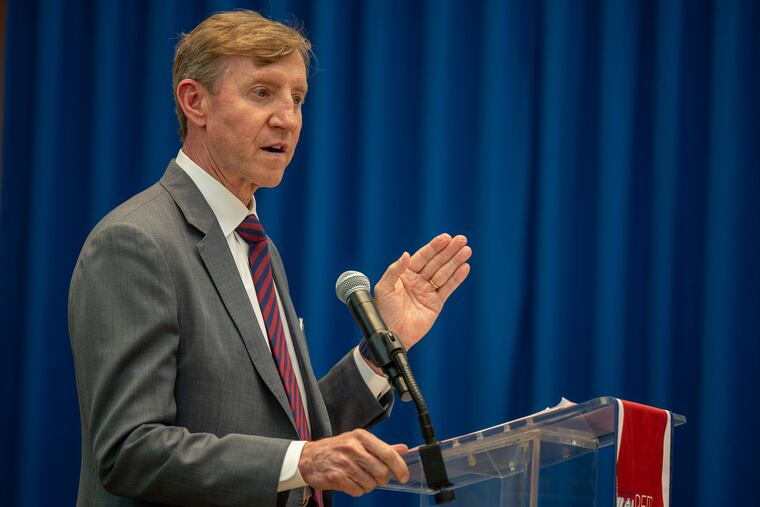
Lawmakers conduct hearing on Trump’s anti-DEI policies affecting local campuses; university leaders absent from the discussion.
Representatives from Philadelphia’s City Council and the Pennsylvania General Assembly convened on Friday to discuss the implications of the Trump administration’s stance on diversity, equity, and inclusion (DEI) initiatives within local educational institutions. However, the hearing was notably marked by the absence of representatives from any of the universities invited to participate.
The hearing focused on the impact of President Donald Trump’s executive order, signed in January, which has deemed DEI programs “dangerous, demeaning, and immoral” and mandated federal agencies to counter any private-sector initiatives that favor DEI policies. The absence of university representatives, particularly from the University of Pennsylvania, which recently removed DEI initiatives from its website in light of the executive order, was met with disappointment from lawmakers.
City Councilmember Jamie Gauthier articulated her frustrations, emphasizing that Penn’s refusal to attend the hearing was perceived as dismissive and an affront to the concerns raised regarding the administration’s actions. Attendees included professors and legal scholars who were prepared to engage on this pressing issue, yet the empty seats for university administrators spoke volumes about their institutions’ commitment to addressing the current socio-political climate.
The University of Pennsylvania submitted written testimony from its Vice President for Government and Community Affairs, Jeffrey Cooper. Though the testimony reiterated the university’s commitment to principles of equal opportunity and diversity, it also noted that practices may evolve with changes in federal regulations and legal interpretations.
This incident is not isolated. Earlier, Penn, along with other universities, criticized government interference in their operations and expressed a collective stance against undue intrusion. The situation further escalated when the Trump administration paused 5 million in funding for Penn in response to controversies surrounding its support for transgender athletes, a decision that Penn firmly maintains was made in compliance with NCAA guidelines.
Lawmakers expressed their concerns through pointed questions directed at an empty chair bearing the university’s logo, questioning the administration’s selective engagement in discussions that only seem to pertain to specific social issues, such as antisemitism, while neglecting broader DEI topics. The absence of representatives from other institutions, including Jefferson, Villanova, Temple, and prominent universities like Princeton and Harvard, compounded frustrations. While Temple could not send a representative due to commencement activities, others did not provide justification for their lack of attendance.
Despite their absence, universities such as Princeton and Harvard received commendations for their support of DEI initiatives, in stark contrast to the actions attributed to the University of Pennsylvania. Lawmakers criticized what they described as a lack of courage on the part of Penn, stating that inaction could diminish the institution’s credibility and influence in promoting equitable treatment for marginalized communities.
The hearing underscored the ongoing tension between educational institutions and government policy, raising critical questions about the future of diversity efforts in the face of shifting political landscapes. Media News Source will continue to monitor how these developments unfold and their potential impact on higher education and advocacy for diversity and inclusion in the academic domain.