
Lawsuit claims bank’s fraud investigator harmed Pennsylvania car dealership through discriminatory practices.
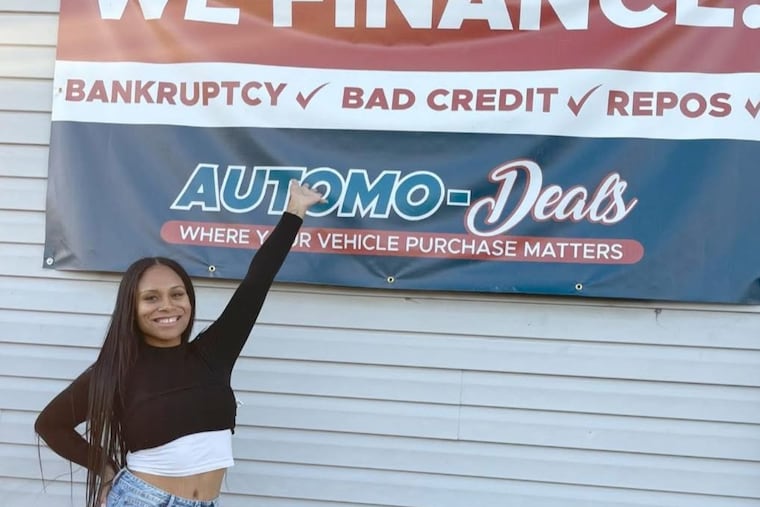
In a compelling story of resilience and the ongoing struggles faced by Black entrepreneurs, Tianna Williams, a 30-year-old former car dealership owner, is taking legal action against M&T Bank following a series of events that she claims decimated her business and financial well-being. Williams, who dropped out of high school after becoming a mother at 16, began her journey in the car sales industry by flipping vehicles, eventually achieving remarkable success with her own dealership in the Lehigh Valley that once grossed over million annually.
The troubles began in the spring of 2023 when M&T Bank initiated a fraud investigation into her business operations, an act she contends was unfounded and damaging. According to her lawsuit filed in the Philadelphia Common Pleas Court, the bank mistakenly alerted her financial partners to questionable activities, resulting in severed relationships and an account freeze, which led to bounced checks and ultimately caused her business to collapse.
Although M&T’s legal representatives later stated that the investigation found no evidence of fraud, the damage to Williams’ reputation and business was already severe. She describes the investigator as having displayed “overzealous” and “racist” behaviors during the inquiry, including making disparaging remarks that reflected a bias against her as a Black businesswoman.
The phenomenon of being treated with skepticism by financial institutions, commonly referred to as “banking while Black,” is not new and has persisted for decades. Historical patterns illustrate that Black communities have been systematically marginalized within the financial system, facing challenges in securing loans or fair banking services. This discrimination has roots that extend back to practices such as redlining, where predominantly Black neighborhoods were deemed unworthy of investment.
Data reveal that Black customers often encounter obstacles in financial institutions, ranging from denial of basic services to harsher scrutiny in lending practices compared to white counterparts. Recent reports indicate that in the Philadelphia area, Black individuals are less likely to possess bank accounts than their white peers, highlighting the ongoing disparity.
Williams, whose entrepreneurial journey began with a passion for flipping cars, now faces a drastically altered financial landscape. With her dealership’s demise, she is left cleaning houses to support her family, while grappling with the emotional and financial fallout of her dealings with M&T Bank. Legal proceedings continue in her case, with the bank contesting the release of documents related to the investigation despite a court ruling requiring transparency.
As this case unfolds, it underscores broader issues of equity and fairness in financial practices, calling attention to the need for reform in how banks engage with minority-owned businesses. Williams has expressed her determination to reclaim her footing, emphasizing her identity as a car salesperson and the unyielding hope for her future in the industry.


