Letters to the Editor published on December 23, 2025.
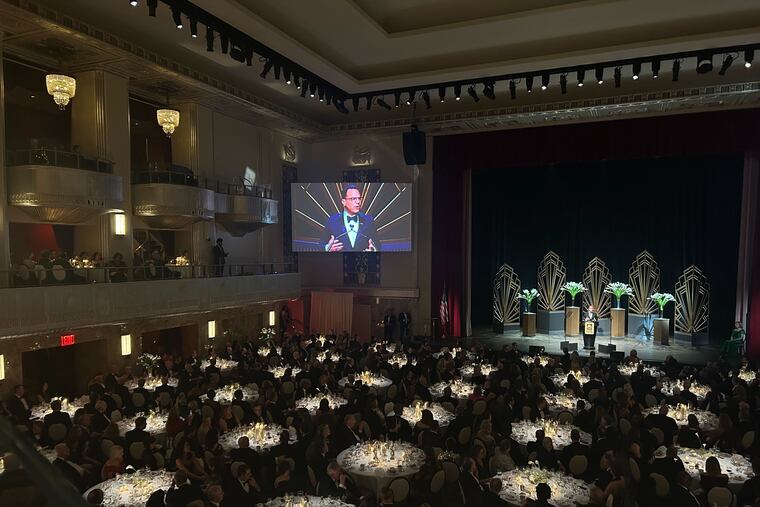
In a recent gathering in New York City, Pennsylvania’s political elite converged for the annual Pennsylvania Society dinner, an event characterized by its ,000-per-plate cost. This gathering has drawn criticism for its role in promoting a “money primary” that favors candidates backed by corporate interests, overshadowing the voices of those seeking to represent constituents without such financial support. As the state gears up for the 2024 gubernatorial race, notable attendees included both likely nominees and several candidates vying for key congressional positions, highlighting the extent to which fundraising overshadows substantive political discourse.
Critics argue that such high-profile events divert essential resources and time away from pressing issues within the commonwealth. Currently, over 300,000 residents of Philadelphia are living below the poverty line, illustrating a severe socioeconomic challenge. This is compounded by a reported 10% increase in homelessness in the city, a concern that persists despite the lavish spending observed at fundraising dinners. Additionally, approximately 40% of households in Pennsylvania are categorized as asset-limited, income-constrained, and employed (ALICE), underscoring the financial struggles faced by many citizens.
The emphasis on fundraising events like the Pennsylvania Society dinner suggests a wider systemic issue: the prioritization of the interests of affluent individuals over the urgent needs of the community. Critics contend that this dynamic fosters an environment where political power is concentrated among the wealthy, while essential issues, such as poverty alleviation and community development, receive insufficient attention. The narrative of protecting narrow self-interests rather than promoting genuine political transformation raises ethical questions about the state of democracy in Pennsylvania.
In a separate note, there is growing concern for Yorktown, a historic neighborhood in North Philadelphia that has been overlooked in recent heritage celebrations. As the city commemorates various communities with painted replicas of the Liberty Bell, Yorktown, notable for its significance in American history, has not been recognized. Established in the late 1950s as part of an urban renewal project tailored for Black homeowners, Yorktown was named to honor the pivotal Battle of Yorktown, which contributed to the United States’ struggle for independence.
Yorktown’s history, significant as it is, begs the question of why it remains absent from initiatives aimed at recognizing Philadelphia’s diverse cultural heritage. As the community celebrates its unique identity and historical relevance, residents are left wondering when it may receive the recognition it deserves.
The contrast between the prioritization of influential political gatherings and the neglect of historic neighborhoods like Yorktown speaks to larger themes regarding the distribution of attention and resources in urban Pennsylvania. Those vested in their communities continue to advocate for awareness and support as they strive to secure a legacy that aligns with their rich historical contributions.
Both narratives highlight critical aspects of Pennsylvania’s political and social landscape. As key elections loom and efforts to celebrate the state’s history unfold, the need to shift focus towards meaningful engagement and recognition of all communities remains paramount.
Media News Source.