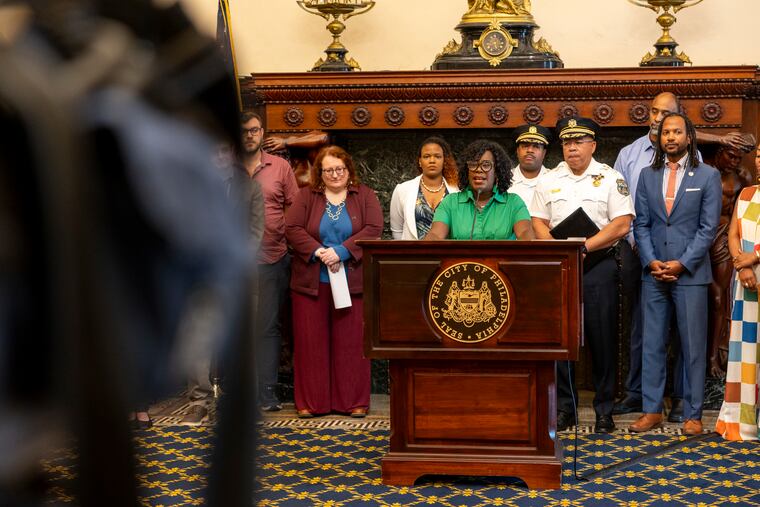
Mayor Cherelle Parker criticizes Senate GOP funding proposal and urges lawmakers to allocate budget support for SEPTA.
In a recent press conference, Philadelphia Mayor Cherelle Parker addressed the forthcoming service cuts proposed by the Southeastern Pennsylvania Transportation Authority (SEPTA), framing them as a significant threat to both the city and Pennsylvania’s fiscal stability. With SEPTA facing an alarming 3 million operating deficit for the fiscal year 2026, which initiated on July 1, the agency has announced plans to implement a 20% reduction in all services and an increase in fares starting August 24.
Parker underscored the critical role that SEPTA plays in the region’s economic infrastructure, stating that its operational viability is essential to the broader economic health of southeastern Pennsylvania and the Commonwealth. She emphasized that without robust transit options, residents could face significant challenges, particularly as the new school year approaches on August 25. Parents relying on SEPTA for transportation to schools and workplaces will be disproportionately affected by the cuts.
Despite the urgency of the situation, Parker refrained from detailing specific contingency plans to assist residents in navigating the impending transit challenges. She conveyed her ongoing hope that the Pennsylvania legislature, currently facing an impasse on the state budget—now over seven weeks overdue—would reach a consensus on new funding mechanisms for SEPTA. Past proposals have included new revenue streams through the taxation and regulation of emerging markets such as skill games and recreational marijuana.
This week, legislative discussions in Harrisburg were marked by contention; the Republican-controlled Senate passed a proposal to utilize funds from the Public Transportation Trust Fund intended for capital projects to temporarily sustain SEPTA. However, the transit agency opposed this plan, arguing that it would compromise essential safety and service improvement projects. A subsequent vote by a Democratic-controlled committee led to the rejection of the Senate’s proposal.
Parker’s remarks reflect her administration’s acknowledgment of the broader implications of transit service reductions on community mobility. While there are currently no plans to suspend attendance requirements for city workers in response to the cuts, the Mayor’s Office is actively working on communication strategies to inform residents about alternative transportation options. Michael A. Carroll, deputy managing director of the city’s transportation office, suggested that residents make use of SEPTA’s trip planner tool, and also encouraged biking or carpooling as feasible options.
As the situation develops, Parker remains optimistic, stating that the city continues to advocate for a solution, and is not ready to abandon hope for preventing the proposed service reductions. The upcoming weeks will be crucial for many Philadelphia residents who depend on public transportation, as local leaders push for sustainable solutions to ensure continued service and accessibility for all.