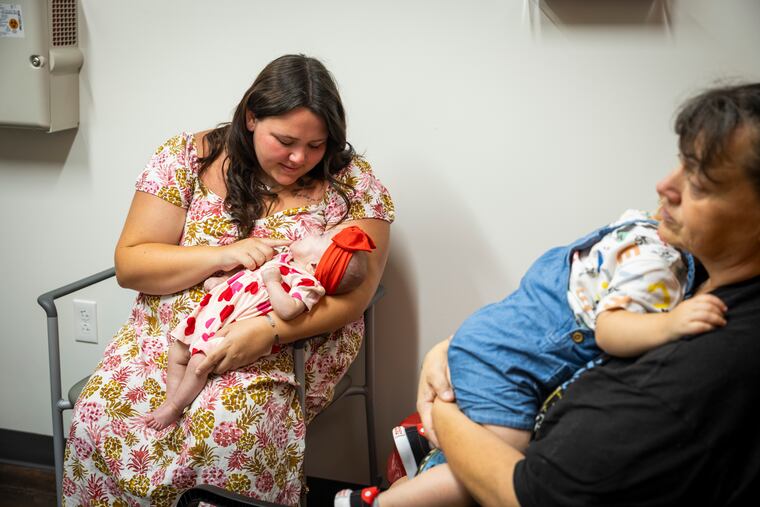
Medicaid cuts jeopardize rural hospitals and access to maternity care for underserved communities.
In a deeply concerning trend, the intersection of healthcare policy and maternal health is growing increasingly precarious for women in rural America, as illustrated by the experience of Jacalyn Stuff of Morehead, Kentucky. At just 19 years old, Stuff faced a harrowing situation when, at the conclusion of her first trimester, she received distressing news regarding her pregnancy with twins. This was exacerbated when her local medical facility, UK St. Claire Regional Medical Center, informed her they could no longer provide the necessary care, forcing her to repeatedly travel to facilities that specialized in high-risk pregnancies.
The complications associated with her pregnancy required her to make frequent trips—70 miles to Lexington and over 100 miles to Cincinnati—leading to financial strain for fuel and lodging. Further complicating this already challenging situation was the need to arrange care for her infant son while navigating the distance required for specialized medical attention.
As states grapple with the implications of recent Medicaid cuts introduced under President Donald Trump’s tax plan—which slashes nearly trillion from Medicaid funding over a decade—many rural hospitals may face service reductions or closures. This is particularly true for maternity care, a segment of healthcare known for its high costs. According to hospital groups, Kentucky is projected to lose close to billion in rural Medicaid funding, which may result in the closure of approximately 35 hospitals statewide. Only a dozen of these facilities still maintain labor and delivery services, with some already halting planned expansions.
Healthcare experts note that Kentucky’s rural areas are especially vulnerable, given that the state has one of the highest proportions of births covered by Medicaid at nearly 50%. The new legislation imposes work requirements, with predictions by the Congressional Budget Office that up to 10 million individuals could lose coverage in the next decade. Those combating the proposed cuts argue that they will exacerbate existing challenges faced by rural hospitals that serve low-income populations.
Women like Stuff might find themselves significantly disadvantaged as health resources dwindle. Even prior to the proposed cuts, many women were already traveling considerable distances— averaging 31 miles—to obtain prenatal care, with 22 counties potentially facing increases in distance of over 30 miles to the nearest hospital should at-risk facilities close.
For Stuff, the complications of her pregnancy escalated dramatically when she was diagnosed with twin-to-twin transfusion syndrome and referred first to Lexington and then to Cincinnati for more advanced care. The financial and emotional burden of such travel only compounded the severity of her situation.
Despite the assurances of hospital officials that not all at-risk hospitals would close, healthcare advocates remain skeptical. They point to increasing obstacles not just for high-risk pregnancies but for all maternity care nationwide, which could leave many women further from essential medical services and support mechanisms.
As Stuff continues to navigate the complexities of her pregnancy, now amid a new pregnancy, she and countless other women face an uncertain future in a healthcare landscape that promises to make access to quality maternal care increasingly difficult.