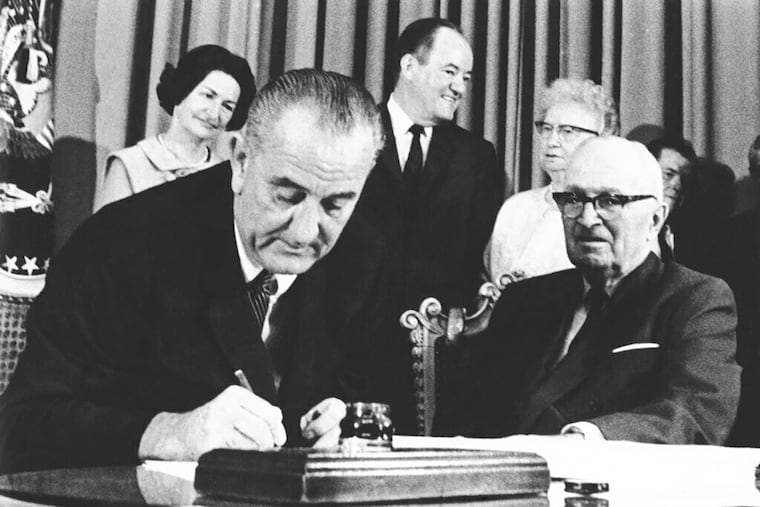
Medicare and Medicaid Programs Celebrate 60 Years of Service and Impact on Healthcare
On July 30, 1965, President Lyndon Johnson enacted two landmark health care programs in United States history: Medicare and Medicaid. These initiatives were incorporated into the Social Security Act, primarily providing health benefits to senior citizens and vulnerable populations.
Medicare, part of Title 18 of the Social Security Act, fundamentally altered the landscape of healthcare for seniors and individuals with disabilities, allowing those outside the workforce to access medical care without succumbing to poverty. Similarly, Medicaid, established from a federal-state partnership under the Kerr-Mills Act of the 1960s, was expanded to cover low-income families, individuals with disabilities, and other marginalized groups.
Wilbur Cohen, who served as the Undersecretary of the Department of Health, Education, and Welfare during Johnson’s administration, is often credited as a key architect of these programs. He envisioned a comprehensive national health insurance system, but was constrained by powerful lobbying from the medical and insurance industries, ultimately leading to the development of targeted programs like Medicare for seniors and Medicaid for those in need. Cohen famously described the gradual approach to legislation as a “salami tactic,” suggesting that reforms were made in incremental “slices” rather than in one sweeping measure.
Sixty years since their inception, the relevance of Medicare and Medicaid remains profound. Currently, Medicare covers individuals with at least 40 quarters of payroll tax contributions, providing essential services to seniors, those with chronic disabilities, and patients requiring dialysis. The absence of these programs would have drastically reshaped family finances, workforce productivity, and overall public health outcomes in the U.S.
As of now, nearly one in four Americans rely on Medicaid, including over 40% of all children. Recent legislative proposals aiming to introduce work requirements and cumbersome documentation processes are expected to hinder access to these essential services. In Arkansas, a similar initiative resulted in the loss of healthcare coverage for more than 18,000 individuals and significant financial costs for the state. Critics argue that such measures detract from the core purpose of these welfare programs and instead create further barriers to access.
The need for universal healthcare is recognized globally. Article 25 of the Universal Declaration of Human Rights asserts that everyone has the right to an adequate standard of living for their health and well-being. This principle underscores the belief that healthcare is a societal obligation, not merely an individual concern. Ensuring healthcare access for all citizens contributes not only to individual health but also to the productivity of society as a whole.
Despite the prevailing notion that market forces can rectify inefficiencies within the healthcare sector, many experts contend that such approaches lead to increased complexity and dysfunction. The system has become plagued with issues related to overcharges by insurance companies, leaving those in need of care to confront the repercussions of market-driven failures.
On this significant anniversary, a reevaluation of the guiding principles related to healthcare is warranted. It is essential to recognize healthcare as a public good, fundamentally necessary for the well-being of society. Rather than pursuing fragmented reforms, a comprehensive approach that honors the original intent of Medicare and Medicaid is required to ensure these vital programs can continue serving the American populace effectively.
Media News Source.