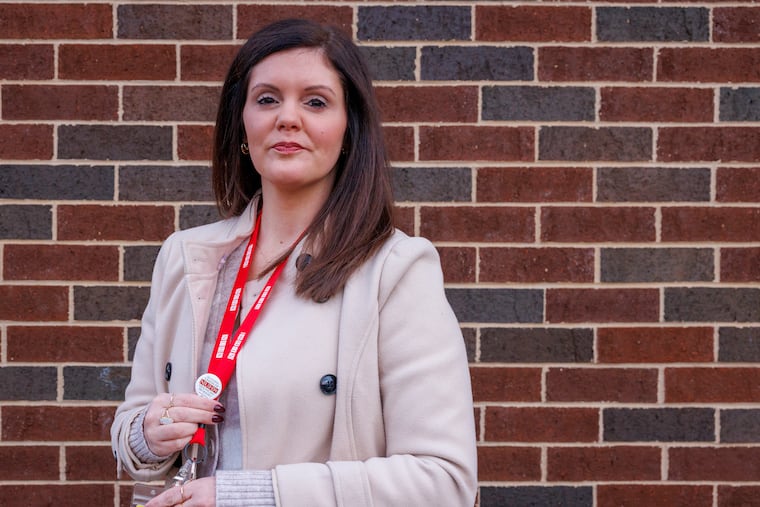
Mental health workers in Philadelphia form a union in response to recent workplace and patient care changes.
Mental health professionals at Rogers Behavioral Health in West Philadelphia have successfully formed a union, driven by concerns over increased workloads and changes in operations that negatively impacted patient care. This unionization effort reflects a growing movement among healthcare workers advocating for better working conditions and sustainable patient treatment.
The nonprofit organization transitioned from a model focused on individual patient sessions to a group care approach, according to Tiffany Murphy, a licensed professional counselor at the facility. Under this new system, some employees experienced changes from salaried to hourly positions, prompting concerns about job security and reduced hours. Murphy noted that these adjustments have likely contributed to an environment where some staff members have opted to leave; she estimates that approximately 22 colleagues have departed in the past year alone.
Nineteen employees, including therapists and behavioral specialists, filed for unionization under the National Union of Healthcare Workers (NUHW) last month. The union was voluntarily recognized by Rogers, marking a significant milestone as it represents the organization’s first union unit in Pennsylvania. NUHW currently represents around 19,000 healthcare workers, primarily in California.
Union leaders have expressed their satisfaction with Rogers’ recognition of their petition, contrasting it with instances where employers mount anti-union campaigns instead. The Philadelphia metro area, which encompasses Camden and Wilmington, has the fifth highest number of working therapists among U.S. metropolitan areas. Data from the Bureau of Labor Statistics reveals that over 500 therapists in this region earn an average salary of ,510.
Despite the union’s efforts, Rogers has declined to comment on the employee organizing initiatives or the recent changes affecting workplace dynamics. The organization provides outpatient treatment and partial hospitalization for various mental health issues, including depression and anxiety, across 10 states.
Recent years have seen a considerable increase in the number of healthcare workers in the region seeking union representation. Notably, employees from Penn Medicine and the Rutgers University health system have recently ratified their first contracts, with a growing number of healthcare professionals in the Philadelphia area now included in union structures. A significant development within this landscape is that approximately 81% of the city’s resident physicians are now unionized.
As a response to altered working conditions, Murphy revealed that many union members are advocating for more manageable caseloads or compensation adjustments to reflect their increased workloads. Those affected by changes from salaried to hourly roles are seeking a return to their previous pay structure. Unionization, according to Murphy, is a means for staff to regain a voice in their workplace, thereby fostering a healthier work-life balance while ensuring high-quality patient care.
This movement aligns with wider trends across the U.S., as the mental healthcare sector is grappling with a notable shortage of professionals, exacerbated by the COVID-19 pandemic’s effects. Experts in the field, including Rebecca Givan from Rutgers University, emphasize the pressures on healthcare providers to manage larger caseloads with minimal staffing, ultimately jeopardizing the quality of care offered to patients.
The organizing efforts led by NUHW aim to amplify the voices of mental health providers and ensure they have a seat at the negotiating table, fostering a work environment that supports both employee well-being and patient care. As unionization efforts gain traction in the healthcare sector, the outcome at Rogers Behavioral Health may serve as a pivotal point for similar initiatives across the mental health landscape in Pennsylvania and beyond.
Media News Source