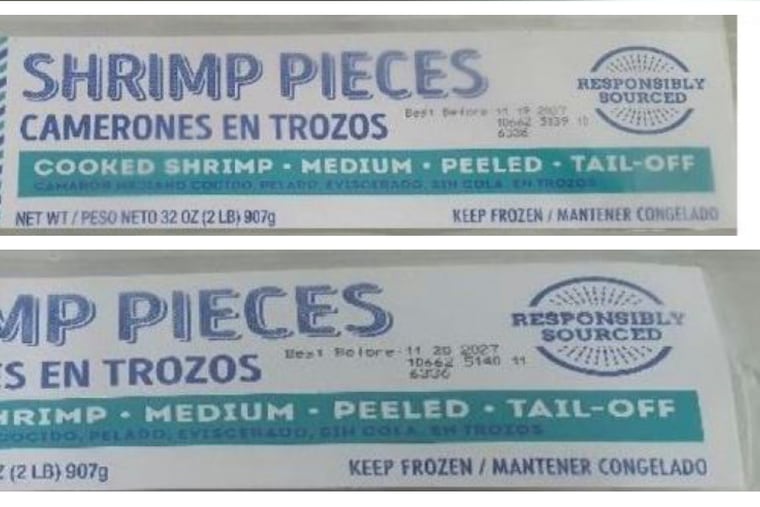
Multiple companies recall thousands of shrimp packages due to potential radioactive contamination.
In an unsettling development, multiple seafood companies have issued recalls for a substantial number of shrimp products sold across major U.S. grocery chains such as Walmart and Kroger. This action follows the discovery of potential radioactive contamination linked to Cesium-137, a radioactive isotope that could pose a health risk to consumers over extended exposure.
AquaStar USA Corp., based in Seattle, is recalling over 26,000 packages of refrigerated cocktail shrimp sold in Walmart locations across 27 states, with the products available between July 31 and August 16. Additionally, the company has announced the recall of approximately 18,000 packages of Kroger-branded cooked, medium peeled, tail-off shrimp, which were on the shelves from July 24 to August 11.
Simultaneously, H&N Group Inc., a seafood distributor in Vernon, California, has also initiated a recall of more than 17,000 cases of frozen shrimp that were distributed to grocery stores along the East Coast, beginning August 12. The recalls are primarily due to the detection of Cesium-137, which can be a byproduct of nuclear reactions. Although the risk is characterized as minimal by federal officials, they caution that prolonged exposure to low-level radiation may pose a potential health concern.
The issue has garnered significant attention from the U.S. Food and Drug Administration (FDA), which issued a safety alert advising consumers against the consumption of specific frozen shrimp imported from PT. Bahari Makmur Sejati, an Indonesian firm. This company has been flagged after shipments to U.S. ports contained detectable levels of Cesium-137. Subsequently, the FDA has placed PT. Bahari Makmur Sejati under a new import alert specifically targeting chemical contamination, effectively halting further shipments from the company into the United States.
Investigations into the source of the contamination are ongoing, and federal authorities have remained tight-lipped regarding the specifics surrounding how these products became compromised. U.S. Customs and Border Protection first identified potential contamination in shipments arriving at various U.S. ports, such as Los Angeles and Miami. Tests conducted by the FDA confirmed the presence of Cesium-137 in at least one sample.
Experts in the field of nuclear radiation generally agree that while the detected level of Cesium-137—approximately 68 becquerels per kilogram—is significantly lower than the FDA’s threshold of 1,200 becquerels per kilogram, it remains unusual. Such concentrations are not typically observed in shrimp; routine environmental levels are about one-hundredth of those found in the affected products. The health risks associated with this contamination may be low, yet experts emphasize the importance of understanding the source to better inform the public.
This situation raises significant questions about food safety and the integrity of imported seafood products. As the investigation unfolds, company officials and regulatory agencies must enhance transparency to ensure consumer confidence in the food supply.