New Jersey urges residents to voluntarily conserve water due to a drought warning linked to climate change.
New Jersey is currently experiencing a significant drought, with certain areas reporting a rainfall deficit of up to eight inches below normal levels over the past year. This persistent dryness has prompted the state’s Department of Environmental Protection (DEP) to issue a drought warning, signaling a pressing need for water conservation even though it falls short of a full emergency declaration.
In light of these circumstances, state officials are urging residents to voluntarily reduce their water usage. If conditions worsen, mandatory restrictions may be implemented, although such measures are infrequently enacted. DEP Commissioner Shawn LaTourette highlighted the urgency of conserving water, citing the variability in precipitation and water supply as symptomatic of the broader impacts of climate change affecting New Jersey.
This marks the second consecutive year in which drought conditions have been officially recognized; the previous drought warning was issued in November 2022. That warning coincided with numerous wildfires that swept through the state, exacerbated by dry and windy weather. Following a period of record rainfall in May 2023, that warning was lifted in June.
According to the Middle Atlantic River Forecast Center, overseen by the National Weather Service, the overall state has faced below-average precipitation for more than a year. Regions such as Burlington, Camden, and Gloucester Counties have reported deficits of nearly four inches over the last 90 days. In contrast, Burlington County faces a staggering shortfall of over seven inches for the past year, while Camden County is down by more than six inches.
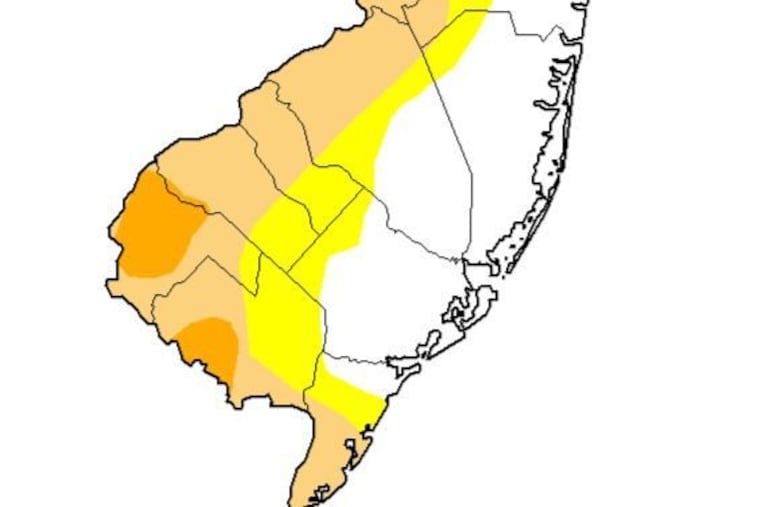
In Northwestern New Jersey, rainfall has been more than eight inches below normal over the same period. The U.S. Drought Monitor indicates that several counties in South Jersey, particularly those along the Delaware River, are experiencing moderate to severe drought conditions. Approximately 3.5 million residents in New Jersey live in areas affected by drought.
Despite recent rains, state officials caution that these have not sufficiently remedied the situation. Only Ocean County has recorded near-normal precipitation levels. An update on rainfall and drought statistics is anticipated soon, as officials continue to monitor reservoir levels, stream flows, and groundwater sources to assess water supply impacts.
Groundwater levels in South Jersey are classified as extremely dry, with streams experiencing significantly reduced flows. This condition has led to observable stress across various water supply indicators, affecting nearly all regions in the state.
The drought is not confined to New Jersey. In Pennsylvania, a recent report indicated that 37 counties are under a drought watch, which is triggered when an area receives 25% less rainfall than normal for three consecutive months.
To mitigate the effects of the drought, New Jersey officials have recommended various water conservation strategies, including running dish and clothes washers only when full, checking for leaks in pipes, and utilizing low-flow fixtures to save substantial amounts of water annually. These measures are crucial to supporting a sustainable water supply as the state navigates ongoing climatic challenges.
As the drought conditions persist, community engagement in conservation practices will be vital in preserving the state’s water resources and aiding affected regions during this critical time.