
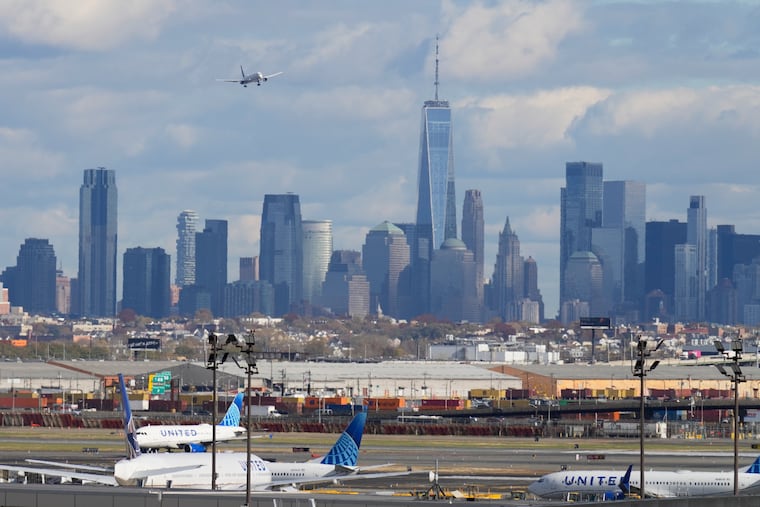
Newark Airport control tower evacuated due to burning smell, temporarily disrupting flights.
Arrivals and departures at Newark Liberty International Airport in New Jersey were temporarily suspended on Monday morning after air traffic controllers evacuated the control tower due to reports of a burning smell emanating from an elevator. The Federal Aviation Administration (FAA) confirmed that the evacuation was precautionary and that, upon investigation, no actual fire was detected.
The disruption to airport operations lasted for less than an hour, and fortunately, there were no injuries reported during the incident. Following the evacuation, FAA personnel relocated to a backup control tower at the airport. They returned to the primary control tower once the situation was assessed and deemed safe for operations to resume.
This incident at Newark Liberty coincides with previous cases of airborne odors disrupting air traffic in other major airports. Earlier in the month, four airports serving the metropolitan areas of Washington, D.C., Baltimore, and Richmond, Virginia, experienced a similar situation when a powerful chemical smell prompted air traffic controllers to temporarily halt all flights. Federal Transportation Secretary Sean Duffy confirmed that the source of the odor was traced to an overheated circuit board that was subsequently replaced, allowing operations to resume without further incident.
It is essential to note that the recent evacuation at Newark Liberty was unrelated to a tragic accident that occurred at New York’s LaGuardia Airport on Sunday night, in which two people lost their lives, and several others sustained serious injuries. That incident involved an Air Canada regional jet colliding with a fire truck while landing, highlighting ongoing safety concerns within aviation operations.
The Port Authority of New York and New Jersey, which oversees the management of Newark Liberty International Airport, expressed its commitment to maintaining the highest safety standards and ensuring the smooth operation of the airport’s facilities. Incidents such as these serve as critical reminders of the importance of emergency preparedness and rapid response protocols in ensuring passenger safety during unexpected circumstances. While disruptions to air travel can be inconvenient, they are often necessary to prioritize safety and mitigate potential risks in busy airport environments.
Media News Source


