
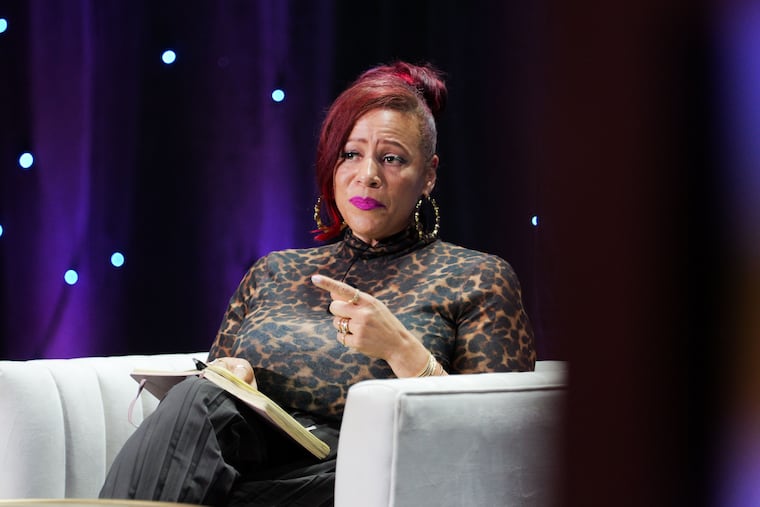
The recent gathering in Philadelphia underscored the vital role of educators of color in the American education system, with notable contributions from influential figures such as Nikole Hannah-Jones, acclaimed journalist and creator of the 1619 Project. The event, attended by more than 1,000 participants, revolved around the initiatives spearheaded by Sharif El-Mekki, founder of the Center for Black Educator Development and a key architect of the Black Male Educators Convening.
During the convention, Hannah-Jones paid tribute to El-Mekki, who recently had a street renamed in his honor, acknowledging his significant impact on her academic journey and perspectives. Reflecting on her own schooling experiences, Hannah-Jones recounted that she had only one Black teacher throughout her education while being bused into predominantly white schools in Waterloo, Iowa. Her African American history teacher, Ray Dial, instilled in her the importance of the year 1619, when the first enslaved Africans arrived in America. Hannah-Jones emphasized that Dial’s teachings profoundly shaped her career and understanding of Black history.
Hannah-Jones expressed a deep appreciation for the gathering of Black educators, particularly for the focus on Black male educators. She opined that every child should have access to positive role models like Dial, recognizing the critical need for representation in educational spaces.
Hannah-Jones also discussed her personal choice of enrolling her daughter in a majority-Black, high-poverty school, believing that their family’s privilege could contribute to advancing educational equality for all students at P.S. 307. Her experiences, documented in a 2016 New York Times Magazine article and further explored in a follow-up piece earlier this year, highlight the complexities and challenges faced by parents navigating the educational landscape for their children.
Her daughter, now 16, ultimately opted for a majority-white and Asian magnet school after experiencing significant educational disparities in her previous schools. Despite the academic advantages of her new environment, Hannah-Jones noted that her daughter encounters cultural challenges and racism, sparking discussions about educational inequities and systemic issues.
Throughout her address, Hannah-Jones underscored the necessity for dedicated educators and supportive learning environments, stressing that solutions to educational disparities must involve systemic changes rather than relying solely on individual sacrifices by families. She argued that meaningful progress requires placing high-quality teachers in schools that serve the most vulnerable populations.
The conference further highlighted the perspective of Philadelphia Superintendent Tony B. Watlington Sr., who articulated the imperative of creating a diverse teacher pipeline to fulfill the promise of equitable education for Black and brown children. He emphasized that achieving educational success is essential for ensuring that these students can thrive as full participants in society, including graduating college and entering the middle class.
This gathering not only focused on current challenges but also sparked important discussions about the future of education, particularly for marginalized communities. The insights shared during the event will undoubtedly continue to resonate as educators, policymakers, and community members work to dismantle longstanding educational inequities and foster an inclusive environment for all students.
Media News Source.