
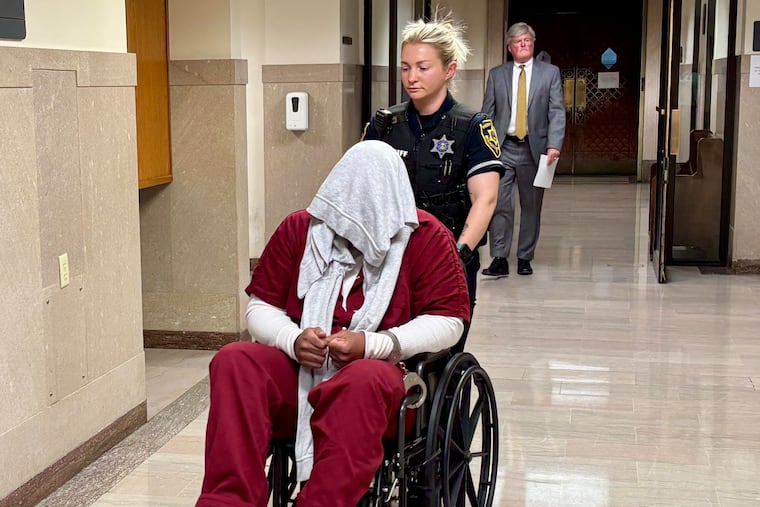
North Philadelphia man sentenced to decades in prison for killing childhood friend and disposing of the body in Lower Merion.
Tyreese Quinerley, aged 40, was sentenced to 18 to 40 years in state prison on Wednesday for the third-degree murder of his childhood friend, Jeremiah Shackford, 31. The crime occurred last year when Quinerley allegedly shot Shackford and subsequently abandoned his body on the side of City Avenue in Lower Merion.
During the sentencing hearing, Quinerley claimed to have no recollection of the events leading up to the killing, attributing his amnesia to intoxication from the powerful hallucinogenic PCP. Judge William Carpenter, presiding over the case in Montgomery County Court, expressed a lack of sympathy for Quinerley’s defense, underscoring that drug-induced habits do not absolve individuals of their accountability for violent actions. Judge Carpenter emphasized the tragic repercussions of the crime, stating that the impact on Shackford’s family and the broader community is “huge.”
Quinerley was convicted after a two-day bench trial in March. Testifying during the proceedings, the defendant stated that he could not remember shooting Shackford or disposing of his body near St. Joseph’s University during busy evening traffic. His attorney, Thomas Egan, suggested that the two friends had spent hours consuming drugs prior to the incident and characterized it as a tragic circumstance rooted in substance abuse.
In a poignant moment during the hearing, Quinerley offered an apology to Shackford’s family, expressing regret for the pain his actions had inflicted but maintaining that he lacked memory of the night in question. Egan, advocating for leniency during sentencing, noted Quinerley’s health challenges, including the necessity of a wheelchair.
Assistant District Attorney William Highland III countered this plea by highlighting Quinerley’s extensive criminal history, including previous convictions for assault and drug-related offenses. Highland underlined the importance of accountability, asserting that the defendant made a series of decisions that culminated in irrevocable harm, despite his claim of not being aware of his actions at the time of the shooting.
Testimonies from two witnesses described seeing Quinerley driving erratically prior to the crime and reported witnessing him exit his vehicle to shoot at Shackford before fleeing the scene. Additionally, surveillance footage corroborated these accounts by capturing Quinerley disposing of Shackford’s body.
Quinerley initially misled police during a 911 call, falsely claiming to be a bystander who discovered Shackford’s body. However, subsequent investigations revealed phone logs showing multiple communications between the two men on the day of the incident, illustrating their longstanding friendship. Shackford’s mother, Maxine High, poignantly described Quinerley as deceptive, emphasizing the deep sense of loss experienced by the family, stating that her son’s life was taken unjustly and remarking on the strong bond they once shared.
Media News Source continues to follow this case closely as the community grapples with the implications of this tragic event.


