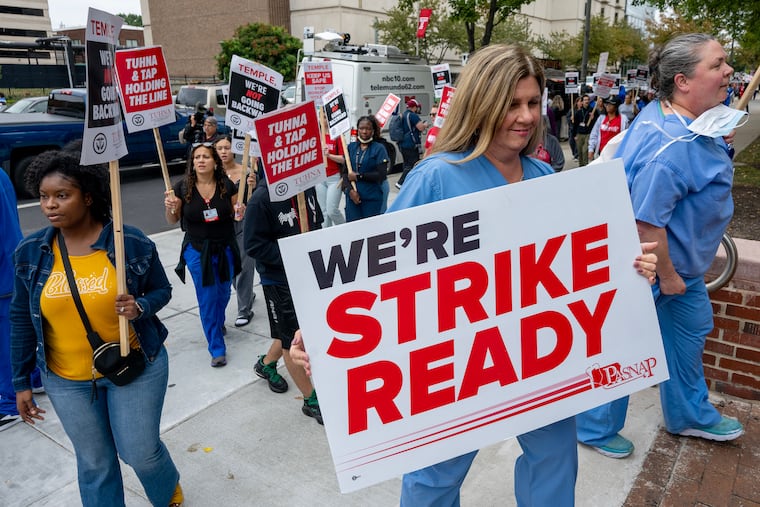
Nurses at Temple plan to strike on October 6 if contract negotiations remain unsuccessful.
Nurses and technicians working for Temple Health have announced a potential strike scheduled for October 6, contingent upon the outcome of ongoing contract negotiations. This announcement from the Pennsylvania Association of Staff Nurses and Allied Professionals (PASNAP) follows a recent vote in which the staff authorized the strike if necessary.
Representing approximately 2,600 healthcare professionals at Temple, PASNAP indicates that the current contract for nurses and technicians is set to expire on September 30. Should the agreed-upon terms not be reached by the deadline, many staff members, including those from Temple University Hospital and Temple Women and Families Hospital, will proceed to walk off the job. Additionally, nurses and technicians in the bone marrow transplant unit at the Temple University Hospital-Jeanes Campus are also prepared to join the strike.
In response to the strike notification, Temple officials expressed disappointment while asserting they were not taken by surprise. The health system has developed contingency plans designed to ensure that patient care continues during the strike, which have already incurred costs exceeding million. A further million will be allocated for staffing measures to cover the absences if the strike proceeds. These expenses, according to Temple Health spokesperson Jeremy Walter, divert funds that could otherwise enhance employee wages or improve necessary equipment.
The ongoing negotiations have brought safety conditions to the forefront. Concerns surrounding workplace violence have emerged as a critical issue for the nursing staff, who argue that their safety must be prioritized in ongoing discussions. Instances of violence against nurses at Temple have reportedly escalated, leading to calls for improved measures to protect hospital staff and patients.
Union representatives emphasize the need for timely debriefings following incidents of violence and are advocating for comprehensive security assessments in hospital areas. They are also expressing concerns regarding potential reductions in benefits for employees seeking healthcare outside of Temple’s system, highlighting issues with the health system’s financial priorities amid federal funding cuts.
The tension at Temple Health is part of a broader pattern seen across various healthcare unions in Philadelphia, where strikes have been threatened or realized in recent contract negotiations. Despite past contentious negotiations, there has usually been a resolution reached before strikes were executed.
As the September 30 deadline looms, both union representatives and Temple Health officials continue to hold discussions in the hope of avoiding a work stoppage, which they agree would complicate and prolong the contract negotiation process.
Attention increasingly turns to how the outcome of this situation could influence future labor relations within the healthcare sector in Philadelphia, particularly as healthcare providers navigate both financial and staffing challenges in an evolving landscape.