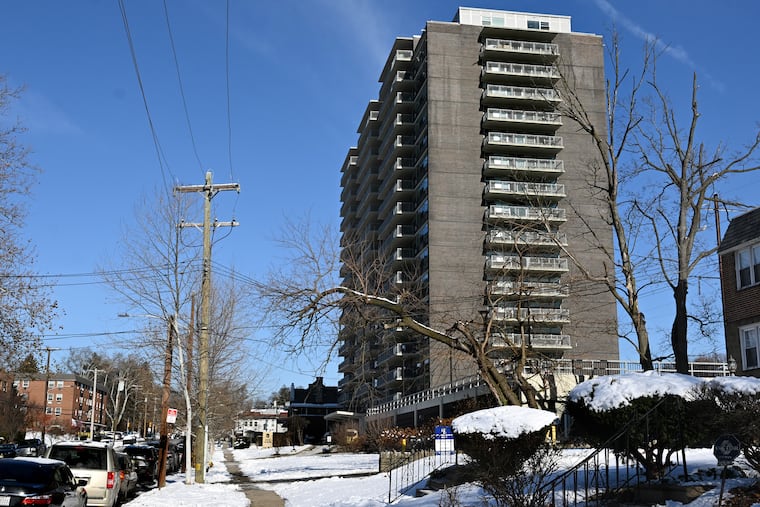
Parker and City Council need to reach agreement on affordable housing solutions.
As Philadelphia’s City Hall gears up to borrow approximately 0 million for housing initiatives, there is a pressing need for the investment to be directed with precision and accountability. Mayor Cherelle Parker and the City Council have recently engaged in discussions regarding varying income guidelines for the city’s housing subsidies. However, rather than perpetuating this divide, collaborative efforts are essential to achieve Parker’s ambitious target of constructing and rehabilitating 30,000 homes.
Central to this discourse is the mayor’s Housing Opportunities Made Easy (H.O.M.E.) program. The program aims to assist a spectrum of residents, drawing a distinction between lower-income households and those slightly above the poverty line, often referred to as “the have-nots” versus “the have a littles.” Mayor Parker, who has represented neighborhoods including Cedarbrook and Oak Lane, insists that city programs must not overlook individuals whose incomes, while above the average, are not substantial.
Contrarily, progressive critics advocate for the allocation of funding primarily to those earning no more than 30% of the regional median income. According to administration officials, the majority of current beneficiaries already fall within or above this threshold, suggesting that elevating the qualifying income levels may not significantly alter the demographic of those in need.
Despite the sometimes-contentious nature of these debates, there exists an opportunity for reconciliation. The two factions in City Hall might discover common ground between existing income guidelines and the mayor’s proposed adjustments. City Councilmember Jamie Gauthier’s proposal to establish a priority lane for the most vulnerable residents further highlights the potential for constructive compromise.
Both sides acknowledge the efficacy of programs like the Basic Systems Repair Program, Weatherization Assistance, and others that support residents in maintaining their existing homes. However, the dialogue surrounding the H.O.M.E. initiative lacks a comprehensive approach toward scaling its objectives to ensure the realization of 30,000 new and renovated homes.
Philadelphia’s capability to undertake such an expansive housing mission cannot be borne solely by the public sector. Even when combined with the substantial billion initiatives from the Philadelphia Housing Authority, private sector involvement is crucial for achieving these goals.
Although the H.O.M.E. plan outlines numerous housing programs slated for expansion, there is a noticeable absence of strategies aimed at reducing bureaucratic impediments and fostering market-rate development. Philadelphia stands apart from other major cities with its vibrant housing sector that serves working-class demographics. Initiatives such as Jumpstart have bolstered a cadre of small developers focused on affordable housing, but these efforts stand to gain immensely from regulatory reforms.
Challenges persist as some residents express skepticism about private sector development. However, it is worth noting that a majority of Philadelphians do not reside in subsidized housing; thus, there remains a continuous demand for housing built on profit-driven motives. The structural changes necessary to shift entirely away from private sector reliance exceed the capabilities of any single administration.
Earlier this year, the Parker administration urged City Council to contemplate a series of zoning adjustments, yet further action is required. The mayor might need to reconsider her stance on councilmanic prerogative to effectively meet the benchmarks set forth in her housing plan. Additionally, reviving the previously successful 10-year property tax abatement for new or renovated homes could serve as a significant incentive, particularly after it was notably reduced in 2021.
Moreover, establishing a revolving loan fund utilizing H.O.M.E. bonds could facilitate financing for affordable housing projects. Although discussions regarding such a fund have surfaced, a concrete plan remains unarticulated.
As Philadelphia confronts its pressing housing affordability crisis, the commitment from both the mayor and City Council to navigating these complexities is paramount. Strategic and informed decision-making will play a foundational role in ensuring that more residents can achieve the dream of homeownership in the city.
Media News Source