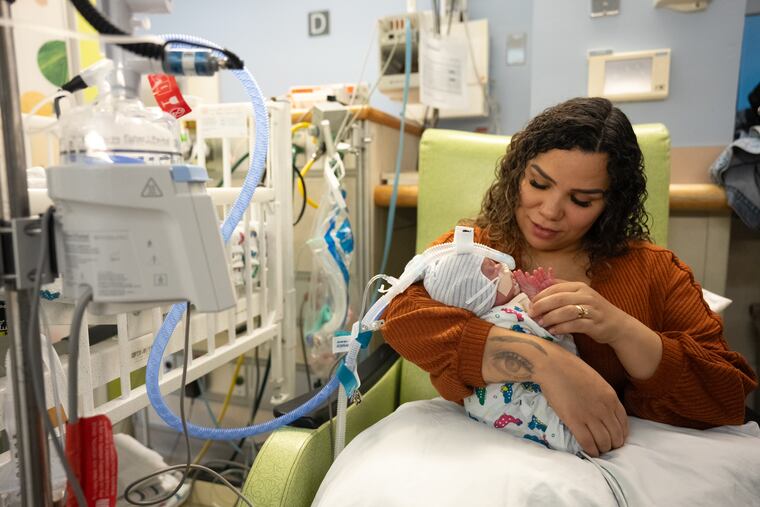
Penn develops beanies for NICU babies that reduce harmful noise and can play recorded messages from parents.
A new innovation aimed at supporting the emotional and physical well-being of premature infants is being tested at the Hospital of the University of Pennsylvania (HUP). The Sonura Beanie, developed by a group of undergraduate students, aims to create a nurturing auditory environment for infants in the Neonatal Intensive Care Unit (NICU), a space often dominated by the harsh noises of medical equipment and alarms.
Pamela Collins, a mother who experienced multiple miscarriages before giving birth, brought her newborn son John to the NICU at 29 weeks gestation. Due to his premature arrival, John required extensive care, prompting Collins and her family to relocate from Mount Pocono to the Ronald McDonald House nearby, allowing them to visit John daily. In visits filled with love and songs, Collins yearned for a way to bring those intimate moments into the NICU environment, where the sounds of beeping machines often overshadowed her voice.
The Sonura Beanie offers an innovative approach to maintaining a connection between parents and their premature babies by filtering out harmful high-frequency hospital noises, which can exceed 2,000 Hertz. The device allows for lower frequency sounds, such as human voices, to be transmitted more clearly, mimicking the womb’s acoustics. It also has the capability to play recorded audio messages from parents, such as lullabies and affirmations, which can have a calming effect on the infants.
After winning Penn’s 2023 President’s Innovation Prize, which provided funding to further develop their initiative, two of the original team members, Gabby Daltoso and Sophie Ishiwari, are conducting trials of the beanie on infants at HUP. They plan to monitor 30 newborns over several months, assessing the device’s impact on vital signs indicators such as heart rate and respiratory function, as well as gathering feedback from both medical staff and parents.
Research has indicated that intensive care environments can be overwhelmingly loud for infants, who are particularly vulnerable to stress from excessive noise exposure. Higher sound frequencies are associated with difficulties in sleeping, feeding, and overall development. With this in mind, the development team aims to mitigate these stressors and promote better health outcomes through focused sound engineering.
The preliminary trial results have been promising, with reports of improved calmness and responsiveness in the infants wearing the beanie. Collins expressed hope that the device could help her son find comfort amidst the overwhelming sounds of the NICU. As the Sonura Beanie moves towards broader clinical trials and potential FDA clearance, its developers envision a future where this innovative technology could significantly enhance the quality of life for vulnerable newborns and strengthen familial bonds during critical early life stages.