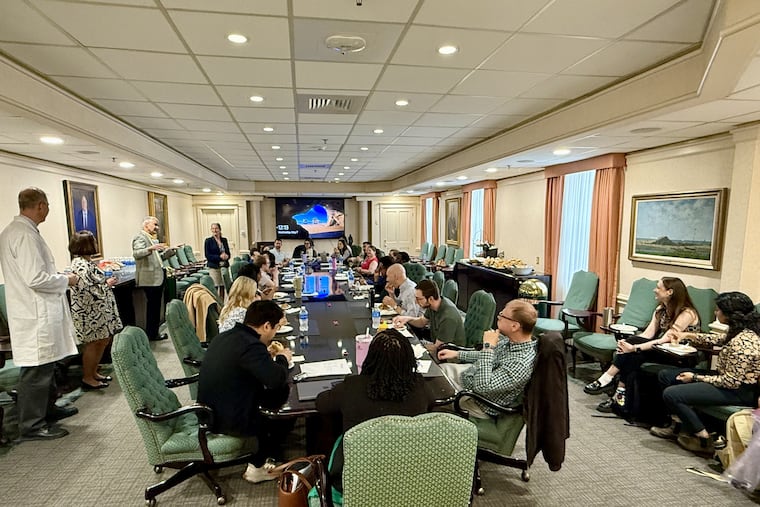
Penn Medicine hires 45 displaced physicians-in-training from Crozer’s closure, including the complete family medicine group.
The University of Pennsylvania Health System is poised to accelerate its recruitment of family medicine resident physicians at Chester County Hospital. In a significant response to the recent closure of Crozer Health, which declared bankruptcy, the establishment plans to initiate its family medicine residency program a year earlier than previously scheduled. This decision will accommodate 26 family medicine residents who have been displaced due to the closure of Crozer Health.
The transition aims to enhance the availability of primary care physicians in the communities serviced by Chester County Hospital, allowing these trainees to acquire hands-on experience with hospitalized patients. Implementing this program will also address potential healthcare service gaps in parts of Delaware County, where Crozer residents previously provided critical care, particularly at facilities such as the Springfield Center for Family Health and ChesPenn’s Center for Family Health in Upper Darby. Collectively, these sites serve a substantial patient population, treating approximately 9,000 low-income patients annually at the ChesPenn clinic and 15,000 patients at the Springfield location.
In an effort to ensure continuity in healthcare services, the University of Pennsylvania Health System has also agreed to hire all 12 family medicine physicians from Crozer’s Springfield program, effective May 19. The integration of these medical professionals is part of a broader initiative, which includes the assimilation of three sports medicine fellows, ten internal medicine residents, four ob/gyn residents, and two transitional year residents into its network of hospitals, including the Hospital of the University of Pennsylvania and Pennsylvania Hospital.
Aside from Penn, other healthcare systems are taking similar actions to absorb Crozer residents. Main Line Health has assumed Crozer’s psychiatry residency, incorporating 13 current residents and additional incoming trainees. Additionally, Jefferson Health has taken on 20 residents, inclusive of ten emergency medicine trainees, while Temple Health, ChristianaCare, and Trinity Health Mid-Atlantic have also recruited several displaced residents.
The American Council of Graduate Medical Education’s directory indicates that Crozer Health had 112 residents across various programs. As a result of the system’s closure, many residents are actively seeking new residency placements. While some individuals will finish their training at Chester County Hospital, the overall movement of residents has led to a swift reshuffling within the medical community.
This expedited program launch aligns with Penn’s ongoing commitment to strengthen the primary care workforce in Chester County. Richard Wender, the chair of family medicine at Penn, explains that although not every resident will remain in the local area, fostering a robust residency program is expected to yield a long-term increase in the number of family physicians in the community. The success of family medicine programs, such as the one at Lancaster General Hospital, which has been in operation for 50 years, serves as a model for Penn’s strategic goal of enhancing healthcare availability through these initiatives.
For those involved in the medical education sector, the developments signify a pivotal moment in residency training, as institutions adapt to changes in healthcare provision while striving to maintain and improve patient care access across the region.