Pennsylvania Academy of the Fine Arts introduces new certificate program, replacing traditional college degrees.
In a pivotal shift for the Pennsylvania Academy of the Fine Arts (PAFA), the institution has detailed plans for a newly revamped studio residency certificate program, succeeding its long-standing college degree offerings which were phased out. Following the academy’s announcement in early 2024, expectations surrounding this initiative have been closely monitored by the art community and prospective students alike.
The revised certificate program marks a significant departure from its predecessor, offering more flexible duration options. Students can now complete their studies in one or two years, depending on individual aspirations and artistic goals. Unlike the previously rigid curriculum, this new structure emphasizes customization, allowing participants to collaborate closely with PAFA to design a personalized academic journey.
Sonia BasSheva Mañjon, the chief academic officer at PAFA, acknowledges that while the program may attract recent high school graduates, its primary audience will be established artists seeking to refine their crafts through access to dedicated studio spaces. In redesigning the program, PAFA conducted thorough research into national trends, determining that shorter, more intensive certificate programs are increasingly favored both in terms of cost and time commitment, corroborating the institution’s strategic direction.
While some alumni, including notable artist Bill Scott, have expressed skepticism about the new program—suggesting it resembles a workshop rather than a comprehensive education—others in the art community see it as a necessary evolution in response to changing dynamics within art education and the financial pressures facing institutions like PAFA. Kathryn Heidemann, president and CEO of the Cleveland Institute of Art, commended PAFA for proactively leveraging its legacy while adapting to contemporary challenges.
Established in 1805, PAFA is the oldest art school and museum in the United States, known for producing luminaries such as Mary Cassatt and David Lynch. Nonetheless, facing fiscal challenges that led to the cessation of its college degree programs—a decision made after revealing significant financial deficits—the academy is pivoting toward a sustainable educational format.
The new offerings at PAFA include a foundational certificate focused on art fundamentals for high school graduates, a one- or two-year studio residency certificate aimed at emerging artists, and a post-baccalaureate graduate-level program designed to bridge students to further academic pursuits or professional careers. In collaboration with the University of Pennsylvania, PAFA will also continue its Bachelor of Fine Arts program, enhancing its educational portfolio.
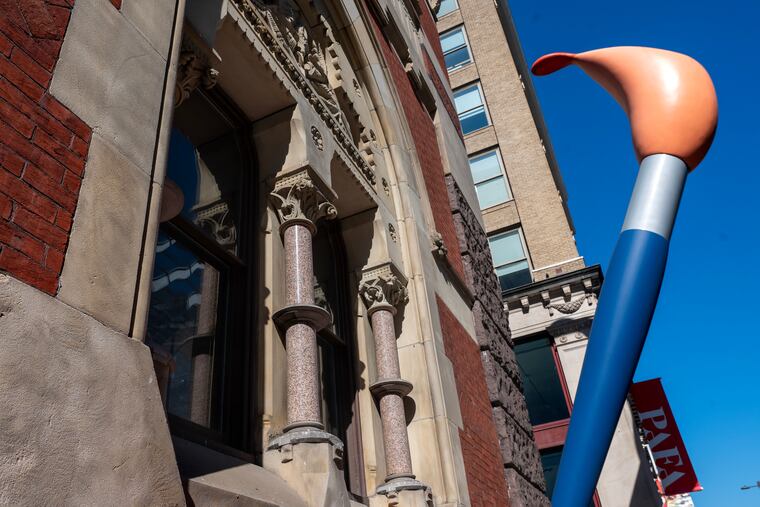
To mitigate financial pressures, PAFA is exploring alternative revenue streams, including renting space within its facilities and possibly selling naming rights to historic buildings. The academy’s enrollment has experienced a steep decline, illustrating the need for these changes; from 270 students in 2019, the current enrollment stands at 126 students in 2023, with hopes of attracting 45 new participants for the program’s inaugural year.
With competitive pressures and the evolving landscape of art education necessitating innovation, PAFA’s response reflects a commitment to preserving its esteemed reputation while transitioning to a more viable model. Early indicators of interest in the new program have provided a measure of optimism among PAFA leadership, who are hopeful for a resurgence in both enrollment and the institution’s broader impact within the Philadelphia arts community.
As the academy embarks on this new chapter, the success of the restructured educational offerings will depend heavily on the quality of instruction and faculty engagement, elements that are crucial for maintaining PAFA’s legacy as a significant force in American art education.