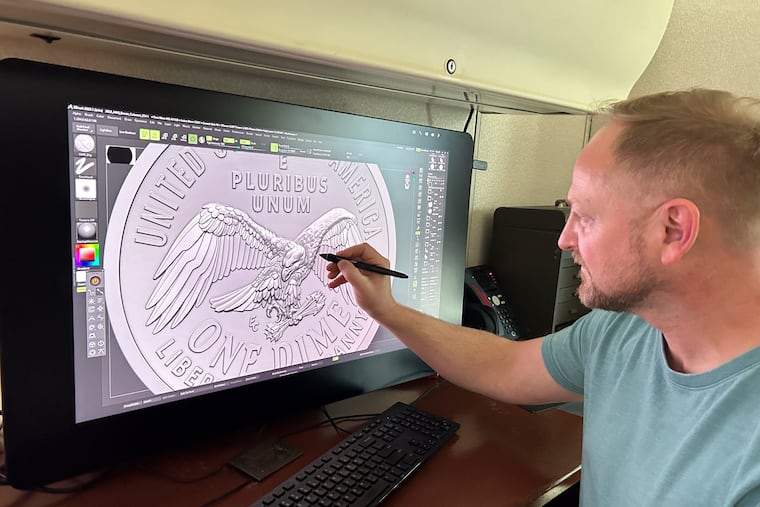
Pennsylvania Artists Specialize in Designing Artwork for U.S. Coins, Navigating Challenges in the Process.
The art of coin production in the United States is intrinsically tied to its history, culture, and a network of skilled artists. Situated just north of Independence Hall in Philadelphia, the U.S. Mint serves as a pivotal hub for coin engraving, employing a dedicated team of medallic artists who are responsible for designing and sculpting the intricate details found on circulating coins, congressional medals, and collectible pieces. This facility is one of four locations across the country that produce coins, with others in Denver, San Francisco, and West Point, New York.
The processes involved in coin sculpting are intricate and demanding. Artists create three-dimensional designs that remain highly detailed while adhering to tight constraints. Phebe Hemphill, a medallic artist since 2006, emphasizes the unique challenges associated with working in a low relief format: the sculpted images must be precisely calibrated to fit within a minimal height, often resulting in details that are only slightly raised yet remarkably intricate. Hemphill’s background includes formative experiences at the Franklin Mint, and she has been instrumental in designing various honored coins, including a Congressional Gold Medal presented to the Tuskegee Airmen.
Equally essential to the art of coin production is the expert craftsmanship of Eric David Custer, who joined the Mint in 2008 and became a medallic artist in 2021. He underscores the complexity of creating the ‘illusion of depth’ while working within the constraints of the coins’ dimensions. Coin designs must be optimized for successful manufacturing and should resist issues like inconsistencies during production, further complicating the artist’s role.
The artistic journey of each coin begins with legislative authorization from Congress, which outlines the necessary design parameters. Artists then submit line drawings that undergo thorough revisions before a final design is approved by the U.S. Treasury Secretary. After approval, in-house artists like Custer and Hemphill translate those sketches into precise three-dimensional sculptures, accounting for every detail in a tightly regulated timeframe, often with only a few weeks to finalize their impressions.
The historical context surrounding their work anchors the creative process. For example, Custer drew inspiration from his surroundings while developing designs for coins commemorating the nation’s 250th anniversary. His ‘Emerging Liberty’ dime reflects elements of the Great Seal of the United States, symbolizing the colonial struggle for independence. Similarly, Hemphill’s work on the U.S. Constitution Quarter required intimate knowledge of Independence Hall, allowing her to accurately render its architectural features from personal observation, rather than relying solely on photographs.
The expertise required in this field emphasizes not only artistic vision but also a profound connection to history and culture. The Mint’s engraving operation, which has remained in Philadelphia since its founding in 1792, showcases the importance of craftsmanship that results in the coins that circulate in everyday life. Through their meticulous efforts, the artists at the U.S. Mint ensure that each coin is not merely currency, but a piece of American art and history.
Media News Source