Pennsylvania artists specialize in designing U.S. coin art, overcoming the challenges of creating intricate designs for currency.
If you have coins in your pocket, purse, or wallet, you are likely carrying a piece of artistry created in Pennsylvania. The U.S. Mint, which operates facilities in four cities—Denver, Philadelphia, San Francisco, and West Point, New York—has its engraving hub situated in Philadelphia. This facility, located a short walk from Independence Hall, is responsible for producing designs for circulating coins, congressional medals, and collectible pieces, employing a talented team of medallic artists.
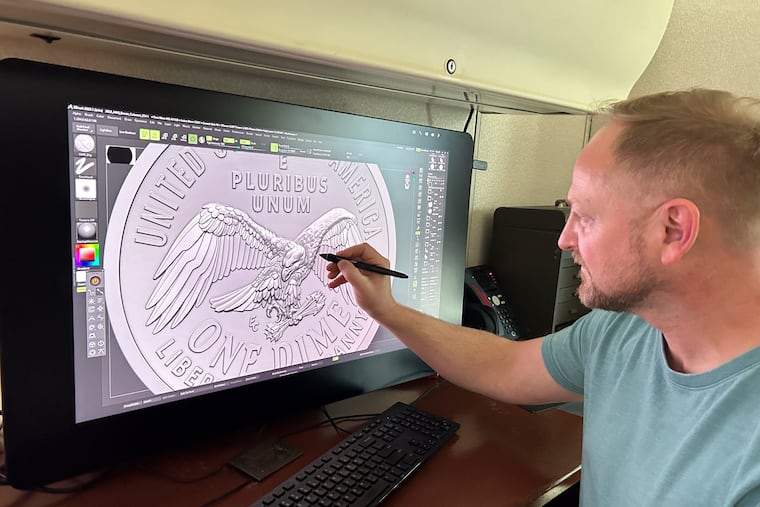
At the heart of this artistic endeavor is a meticulous sculpting process. The images on coins are rendered in three dimensions, which presents an intriguing challenge for artists. Phebe Hemphill, a medallic artist with the Mint since 2006, described the complexities involved in creating detailed sculptures within the limited space available on coins. This unique artistic challenge is part of what makes the craft compelling and rewarding.
Hemphill, who hails from West Chester and is an alumnus of the Pennsylvania Academy of the Fine Arts, has an extensive portfolio that includes notable designs such as the Congressional Gold Medal honoring the Tuskegee Airmen and a quarter featuring Cuban American singer Celia Cruz. Her colleague, Eric David Custer, another medallic artist at the Mint, shared that the intricacies of sculpting coins—where the thickness of an image is about that of two or three stacked human hairs—require a deep understanding of both artistry and manufacturing principles.
The collaborative environment at the Mint is enriched by artists from diverse backgrounds, each bringing their unique experiences to the table. Some have backgrounds in pottery, while others have worked in different aspects of metalwork. This variety creates a vibrant atmosphere where creativity flourishes.
Since the establishment of the original U.S. Mint in Philadelphia in 1792, the city has remained an essential hub for coin engraving. Although the Mint’s headquarters shifted to Washington, the engraving operations continued in Philadelphia, maintaining a legacy that has seen iconic sculptors like Augustus Saint-Gaudens design coins.
The creation of new coins and medals typically begins with Congressional authorization, leading to the formulation of design standards. Artists, both in-house and freelance, submit preliminary line drawings that undergo a rigorous review process before gaining final approval from the U.S. Treasury Secretary. Once a design is selected, the artists sculpt it into three dimensions, enriching it with details to enhance its visual impact.
The artistic methodology varies among the artists; some prefer traditional sculpting with clay or plaster, while others embrace digital tools for design adaptation. Regardless of the method, artists work within specific legislative constraints, ensuring that their designs accurately reflect mandated elements and themes.
The role of a medallic artist ultimately revolves around translating significant historical moments and figures into compact, tangible art. For instance, while working on coins commemorating America’s 250th birthday, Custer drew upon local resources, including the Museum of the American Revolution, to inform his designs, such as the “Emerging Liberty” dime. Similarly, Hemphill’s sculpture of Independence Hall for the U.S. Constitution Quarter showcased her ability to draw inspiration directly from her environment.
The artistry behind U.S. coins is not just about fabrication but represents a broader narrative of national history infused into everyday currency. As these coins circulate, they serve as miniature monuments to the stories and people that have shaped the nation.