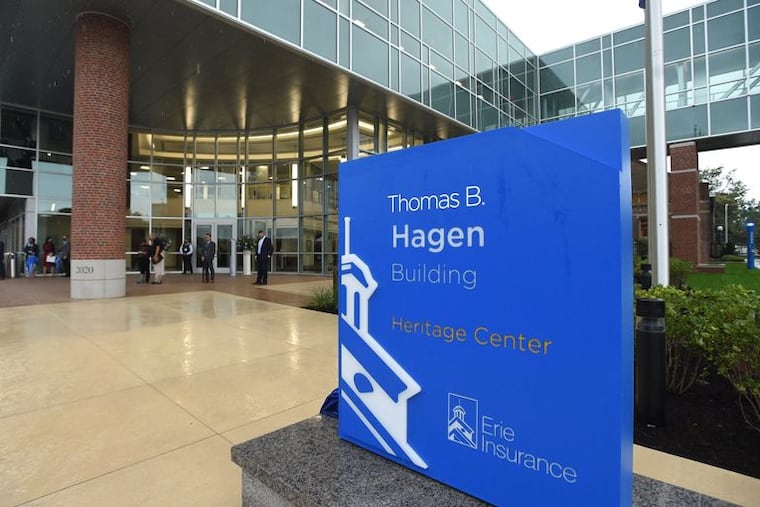
Pennsylvania’s second largest auto insurer raises concerns among Wall Street analysts over its financial performance and business strategies.
In 2024, Erie Indemnity Company gained recognition with its inclusion in the S&P 500 index, an accolade highlighting substantial revenue growth and profitability. The news prompted significant investment from major institutional investors, including the Vanguard 500 Index Fund, driving the company’s shares past the 0 mark for the first time. This surge notably increased the wealth of long-time Chairman Thomas B. Hagen, whose stock holdings reached a peak value of approximately billion in October 2024.
However, despite reporting record profits, Erie Indemnity’s stock has undergone a dramatic decline, losing roughly half of its value since its peak. This drop has resulted in a staggering loss of billion for investors, substantially affecting Hagen’s net worth by billion.
The attention garnered from the S&P listing also introduced scrutiny of Erie’s unique business structure. Analysis revealed that the company’s income, which amounted to billion annually, was wholly reliant on the Erie Insurance Exchange, the underwriting entity that services over 7 million policyholders across multiple states. Under current regulatory frameworks, Erie Insurance Exchange compensates Erie Indemnity with 25% of policyholder premiums for the management services the latter provides, making the exchange the sole customer for Erie Indemnity.
Despite reporting profits of 0 million in 2024—up from 0 million in 2023 and 0 million in 2022—the insurance exchange has struggled significantly, incurring annual losses exceeding billion over the same period. Factors such as rising auto-repair costs and an increase in claims due to heightened severe weather conditions have contributed to these losses. In March 2024, a significant hailstorm became the company’s largest storm expense recorded.
Erie Indemnity’s management has taken steps to address these challenges by raising premiums and cutting operational costs; average premiums increased by 13% in 2024 and 10% in 2025. The company continues to maintain solid financial footing despite turbulent conditions, with a spokesperson asserting that both Erie Indemnity and the exchange remain positioned firmly within the market.
As Erie navigates the complexities of its operational model, the path to restructuring and improving profitability presents an ongoing challenge. Analysts have begun to express cautious optimism regarding future performance as premium increases and cost control measures take hold, while short-sellers have recently ceased their betting against the stock as it approaches anticipated levels of equilibrium. As the company’s fortunes fluctuate, the focus remains on how it will adjust to external pressures and reestablish sustainable profitability.
Media News Source