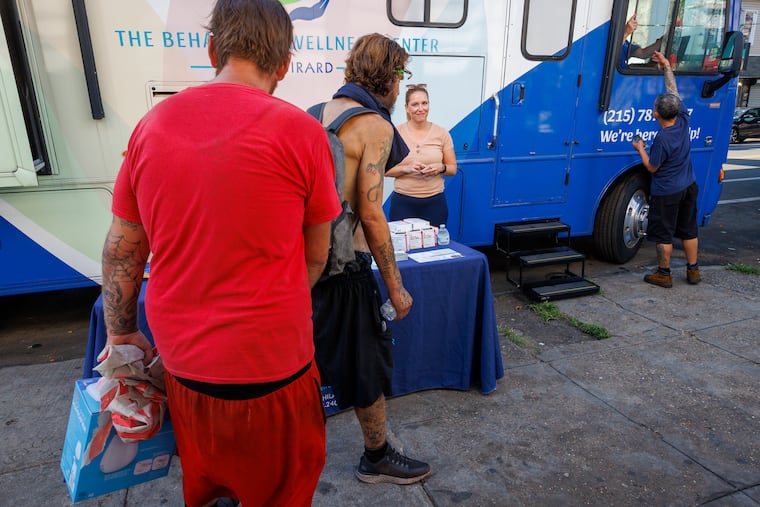
Philadelphia bans mobile addiction services in parts of Kensington and most areas of the Lower Northeast.
Philadelphia City Council is intensifying its confrontation with some harm reduction providers, as a key committee voted to restrict mobile addiction services from certain areas, notably Kensington and its adjacent neighborhoods. On Monday, the Council’s Committee on Licenses and Inspections approved the legislation with a vote of 5-1, which aims to impact the 6th District, currently represented by Councilmember Mike Driscoll, who is also the sponsor of the bill.
The specified area stretches from the eastern side of the Kensington and Allegheny Avenues intersection—acknowledged as a central point in the city’s ongoing opioid crisis—north along the Delaware River and up to Grant Avenue. This legislative measure could receive a full Council vote as early as next month.
Local residents in Kensington have voiced their support for the bill, expressing long-standing concerns about the proliferation of homelessness and substance abuse in their community, suggesting that mobile service providers attract individuals using drugs into residential neighborhoods. Community advocate Darlene Abner-Burton highlighted the challenges her family faces due to the neighborhood conditions, stating that it deeply affects personal relationships and the safety of the environment.
Conversely, several harm reduction advocates have critiqued the legislation, asserting that it will not solve issues of homelessness or addiction. They argue that it could obstruct access to critical medical care that these vulnerable populations rely on, potentially leading to an increase in overdose deaths. Kelly Flannery, policy director at the Positive Women’s Network, labeled the initiative a “cruel ban,” emphasizing the need for dignity and compassion for all community members.
This legislative push is the second instance where the Council appears prepared to impose restrictions on mobile service providers, who typically operate from vehicles to provide essential services such as first aid, food distribution, and overdose prevention measures. Earlier this year, Council enacted similar limitations in the nearby 7th District, which encompasses the western sections of Kensington.
Although that prior bill was approved with a vote of 13-3 and subsequently signed into law by Mayor Cherelle L. Parker, it mandated that the providers obtain licenses and limited operational areas for medical service providers, unlike the current measure which seeks an outright ban. Driscoll justified his introduction of this measure as a proactive step to prevent providers from relocating into his district following restrictions imposed in the 7th District.
The only dissenting voice in the committee vote was Nicolas O’Rourke, an at-large member from the Working Families Party, who previously opposed the legislation affecting the 7th District. As city leadership navigates the complexities surrounding addiction services and community safety, the debate continues to underscore the challenges facing residents grappling with the city’s pervasive substance abuse issues.
Media News Source.