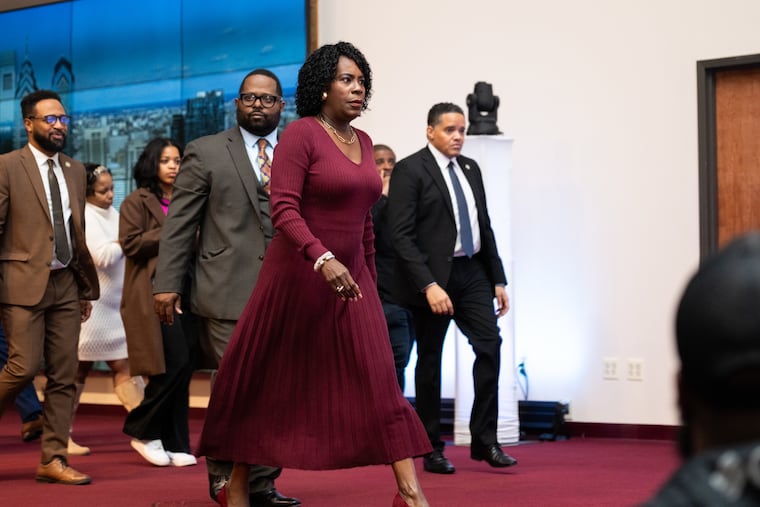
Philadelphia City Council votes on housing plan, signaling a message to Mayor Cherelle Parker about their commitment to oversight.
In a significant development for Philadelphia’s housing policy, Mayor Cherelle L. Parker’s once-unassailable position within City Hall appears to have been challenged. During an intense City Council meeting on her central housing initiative, the Housing Opportunities Made Easy (H.O.M.E.) program, Council President Kenyatta Johnson opted not to allow a vote on an important amendment proposed by Parker’s administration. Instead, he advanced the Council’s alternative version of the legislation, marking a notable divergence from the mayor’s proposed plan.
The Council’s Committee on Fiscal Stability and Intergovernmental Cooperation approved its modifications to the H.O.M.E. initiative on Wednesday, which include provisions allowing the city to issue 0 million in bonds to fund the program. This decision comes despite the mayor’s request for amendments, underscoring a growing rift between the legislative body and the executive branch.
Three council members—Brian O’Neill, Anthony Phillips, and Curtis Jones Jr.—expressed their support for Parker’s original vision by voting against the proposed changes. The legislation is now set to move to the Council floor for final consideration, where further amendments could be made as soon as January.
Central to the disagreement are the income eligibility thresholds for two key housing programs funded by the H.O.M.E. initiative: the Basic Systems Repair Program (BSRP) and the Adaptive Modification Program (AMP). Initially structured by Parker with higher income cutoffs intended to include middle-class households, the Council has shifted its focus to prioritize lower-income Philadelphians. Councilmember Jamie Gauthier, who chairs the relevant committee, emphasized that the Council seeks to fulfill its responsibility to the taxpayer and properly steward public resources.
The outcome of this dispute is particularly telling of a possible change in Parker’s negotiating dynamics, as she has historically maintained a strong influence in prior negotiations. For example, in previous months, amidst a strike by the largest city union, Parker successfully withstood significant pressure, showcasing her firm negotiating style. However, in this latest instance, there appears to be limited recourse for her to stave off Council’s initiative due to legislative procedures favoring the latter’s proposed amendments.
Apart from the structural economic implications, the dispute at hand reflects broader tensions over housing policy in a city facing increasing costs of living. Whilst Parker maintains that her programming is essential for middle-class support in light of rising expenses, the Council’s prioritization of lower-income residents indicates a contrasting policy stance.
The ongoing conflicts over the H.O.M.E. initiative have wider implications for city governance, especially regarding the collaborative relationship that had previously existed between Parker and Johnson since both took office. Observers note that while this particular incident highlights their most significant public disagreement to date, both officials have continued to share overlapping policy objectives. The outcome of this legislative struggle will likely define the future trajectory of housing policy in Philadelphia and may reshape ongoing alliances within City Hall.
As the H.O.M.E. initiative moves toward a final vote, the tension between the Mayor’s office and the City Council has spotlighted the complexities of governance and the diverse priorities that shape Philadelphia’s housing landscape.