Philadelphia Council President praises Mayor Parker for strategically scaling back diversity contracting goals.
In a recent development concerning Philadelphia’s city contracting policies, City Council President Kenyatta Johnson voiced support for Mayor Cherelle L. Parker following her administration’s decision to eliminate certain diversity benchmarks in city contracts. This significant shift in policy aims to align with broader legal standards and trends emerging from recent court rulings, particularly in light of the Supreme Court’s 2023 decision that deemed affirmative action in college admissions unconstitutional.
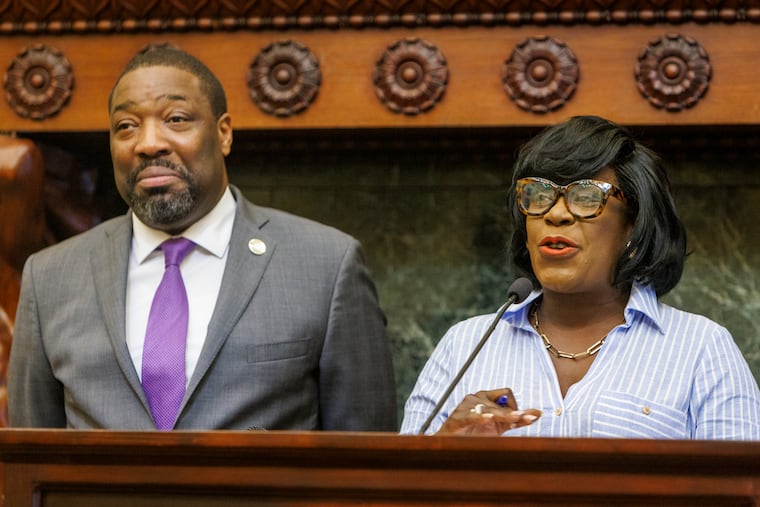
Johnson characterized the administration’s actions as “strategic,” suggesting that the mayor is navigating a complex landscape to prevent potential litigation against the city. His comments came during a media interaction after the City Council’s weekly session, a rare public endorsement of Parker’s policies from a Democrat traditionally reluctant to openly diverge from the mayor.
The Parker administration’s changes involve discontinuing the goal of earmarking 35% of all city contracting funds for businesses owned by women and people of color. In addition, the previous practice of imposing benchmarks on contractors to direct certain proportions of their work to diverse subcontractors has also been abandoned. Instead, the administration is pivoting toward a model that prioritizes incentivizing small and local businesses, a strategy being implemented in various cities across the country.
These modifications emerge amidst a nationwide backlash against diversity, equity, and inclusion (DEI) programs, a trend significantly influenced by political figures, including former President Donald Trump, who has threatened to withdraw federal funding from jurisdictions operating DEI initiatives he deems illegal.
Johnson has been a long-time advocate for equitable contracting practices, establishing committees to examine the city’s DEI initiatives. Even as he defended Parker’s recent changes, he reaffirmed his commitment to ensuring that minority-owned and women-owned businesses secure opportunities for city contracts, particularly within his South Philadelphia district.
Responses from other council members reveal a growing concern regarding the implications of these policy changes. City Councilmember Cindy Bass expressed deep unease about the administration’s direction and emphasized the need for clarity on how these changes will affect community access to city resources. Similarly, Kendra Brooks, a member of the Working Families Party, criticized the move as a capitulation to Trump-era pressures, arguing for a greater commitment from city leadership to champion equitable practices.
As discussions surrounding diversity in contracting continues to evolve, the Parker administration is navigating the delicate balance between legal compliance and fostering an inclusive economic environment. The council’s mixed reactions underscore the complexity of addressing these critical issues in a politically charged climate.