
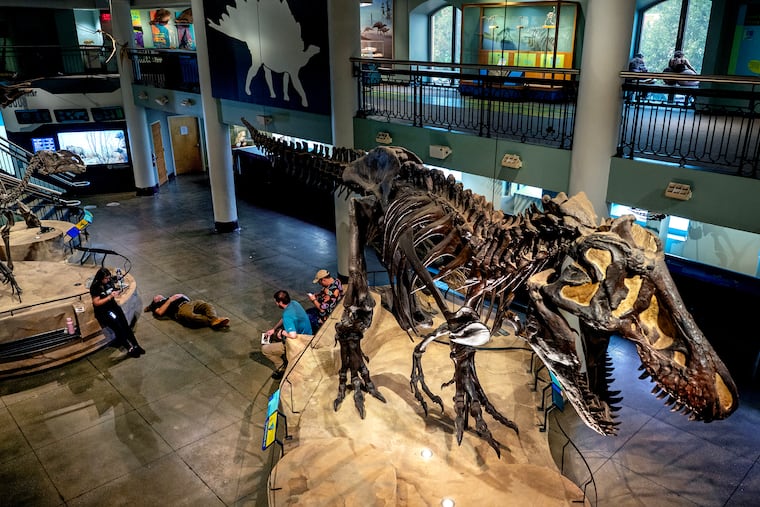
Fifteen years ago, a partnership between the Academy of Natural Sciences and Drexel University significantly enhanced the university’s academic standing while providing vital support for the research institute and museum. The collaboration allowed the Academy, known for its renowned wildlife dioramas and extensive collections, to maintain its historic presence along Philadelphia’s Benjamin Franklin Parkway. However, the abrupt closure of the museum in September has prompted urgent concerns regarding the future of this esteemed institution.
Recent developments reveal escalating tensions between the leadership of the Academy and Drexel University. Reports indicate that their relationship has deteriorated to the point of mutual distrust, likened to the hypothetical animosity between a Tyrannosaurus and a Triceratops. This discord raises questions about the prospects for collaboration, as both institutions grapple with the aftermath of the museum’s closure.
Philadelphia, a city that prides itself on its rich historical and scientific heritage, faced dismay as the Academy’s lights were turned off. The crisis has underscored that the physical assets of the museum, including its impressive building and large collections, are accompanied by another invaluable asset: a strong base of public and political support yearning for the Academy’s continuation in the city.
Public sentiment has been resoundingly in favor of the Academy, with widespread expressions of support following its closure. The outpouring of community engagement has led public officials—from City Council members to Governor Josh Shapiro—to take notice and become involved in discussions about the museum’s future, emphasizing its relevance to the cultural landscape of Philadelphia.
Nevertheless, the challenges facing the Academy are far from new. Like many venerable institutions, it has struggled to attract sufficient visitors to cover its operational costs. Financial reports reveal that the Academy has relied heavily on annual subsidies from Drexel University, which is now retracting its financial support. Consequently, the Academy’s leadership has faced scrutiny regarding the scale and management of its financial deficits.
The recent City Council hearings have highlighted a growing perception of apprehension between Drexel and the Academy, complicating efforts to reach a resolution. The closure of the museum has had immediate repercussions, including layoffs and the relocation of live animals and other components of its collection.
While some city officials advocate for reopening the Academy using public funds, it is crucial that any efforts taken reflect a sustainable approach to ensure long-term viability. The institution not only seeks public support but also requires a comprehensive analysis of its business model and visitor engagement strategies.
Encouragingly, the William Penn Foundation and various charitable organizations are poised to conduct an extensive review of the Academy’s operations and condition. Recently, the Academy accepted this offer for expert recommendations, a proactive step that is essential given the complex relationship between the Academy and Drexel.
Preserving the rich heritage of science and culture in Philadelphia is a critical mission. The Academy of Natural Sciences must be positioned to thrive, rather than be relegated to history like the fossils it houses. With collaborative efforts and renewed focus, it can emerge as a resilient institution, essential to Philadelphia’s identity for years to come.
Media News Source