
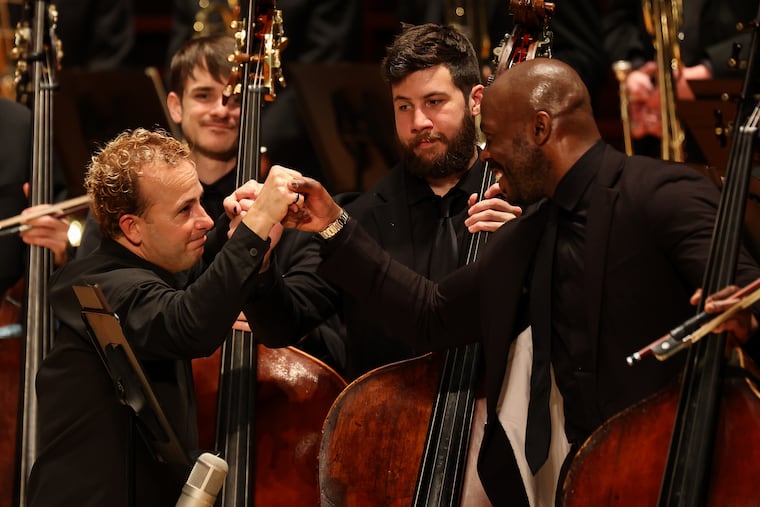
Philadelphia Orchestra delivers high-energy performance of Mahler, showcasing exceptional symphonic precision.
The Philadelphia Orchestra is experiencing a surge of interest in Mahler’s works, with the latest performances under the guidance of music-artistic director Yannick Nézet-Séguin proving particularly impactful. This past weekend, the orchestra presented a powerful rendition of Mahler’s Symphony No. 2, known as “Resurrection,” at Marian Anderson Hall, which drew an enthusiastic response from the audience. The performance highlighted the orchestra’s esteemed status and artistry in the classical music realm, with a repeat performance scheduled at Carnegie Hall, where only six seats remained unsold ahead of the event.
Nézet-Séguin’s interpretation of Mahler’s iconic five-movement symphony, spanning approximately 80 minutes, offered a fresh and nuanced exploration of this monumental work. The “Resurrection” symphony features a large orchestral ensemble, offstage brass, and vocal soloists, alongside the Philadelphia Symphonic Choir, all contributing to its expansive and emotionally charged landscape. In contrast to historical performances which often risked veering into overblown interpretations, Nézet-Séguin’s approach brought clarity and precision, allowing the symphony’s underlying themes and emotions to shine through.
During the performance, the conductor adopted a brisk pace, choosing to accelerate certain passages instead of lingering too long on specific moments. This energetic interpretation conveyed the intense emotional extremes for which Mahler is celebrated. The dynamics of the symphony’s first movement delivered expected contrasts, transitioning into the more dance-like second and third movements which retained a consistent tension without allowing moments of tranquility to linger.
The fourth movement, “Primal Light,” featured the remarkable mezzo-soprano Joyce DiDonato, whose interpretation conveyed a deep sense of understanding and connection to the themes of existence that Mahler explores. The fifth movement is characterized by soaring soprano passages, masterfully executed by Ying Fang. Mahler’s lyrics in this section, particularly the impactful refrain, “You were not born for nothing,” draw connections to his own existential struggles, underscoring the symphony’s meditative quality.
In navigating the complex themes, from the joys to the tribulations of life, the symphony resonates with contemporary audiences, echoing the challenges of our current global landscape. The upcoming performances of Mahler’s Symphony No. 2 at the Kimmel Center promise to be compelling, with tickets priced between and 2, and an invitation extended to all who wish to witness this monumental work. The Philadelphia Orchestra continues to solidify its reputation for excellence and innovation in classical music.
For those seeking more information or to purchase tickets, additional details can be found on the Philadelphia Orchestra’s official website.


