Philly debates whether vacant lots are preferable to deteriorating buildings in ongoing discussions about urban development.
In a recent public conference, Philadelphia Mayor Cherelle L. Parker outlined her vision for the future of Market East, drawing an audience that included prominent developers, lobbyists, and business leaders. This announcement came on the heels of a significant plan involving the Philadelphia 76ers and Comcast, which seeks to demolish several buildings along the 1000 block of Market Street. However, the plans for the vacant space have yet to be disclosed.
During the event, a Comcast executive asserted the intention to accelerate development in the often-disparaged corridor, a promise that failed to quell the concerns raised by historic preservation advocates present at the gathering. These preservationists, equipped with signs declaring their opposition and urging for a cessation of demolitions, emphasized the need for a coherent plan before any demolitions proceed.
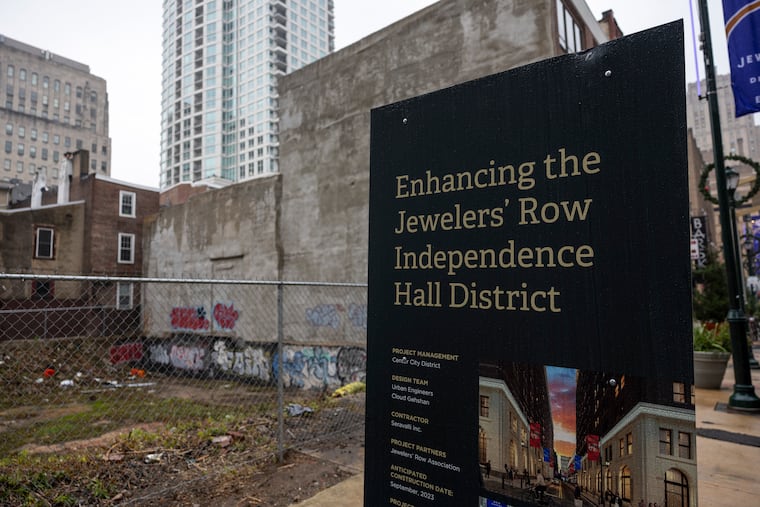
Philadelphia’s complex relationship with its historical buildings is highlighted by data indicating that over 70% of the city’s structures predate 1960, yet only 4.4% are recognized and protected from demolition by the Historical Commission. Preservationists have consistently pushed for enhanced protective measures against the loss of historic buildings, and many community members have expressed frustration over developers’ tendency to leave vacant lots when projects falter, as seen in the case of Toll Brothers at Jewelers Row.
In response to growing concerns, two legislative bills currently under consideration in the City Council would mandate that property owners secure building permits prior to any demolition. Councilmember Jeffery “Jay” Young, representing parts of North Philadelphia and Center City, is backing a bill that aims to establish safeguards ensuring that property owners have actionable plans before proceeding with demolition. Young has emphasized that the legislation is intended to prevent speculative demolitions that disrupt neighborhoods and to promote community stability.
Similarly, Councilmember Jamie Gauthier has proposed related measures for University City, aiming for responsible development practices amidst pressures from higher education institutions undergoing financial shifts. Both bills have encountered opposition from builder advocacy groups, who argue that additional regulations could hinder a key sector already struggling under rising interest rates and material costs.
While advocacy groups including the Building Industry Association argue for eased restrictions on demolitions, preservation advocates caution that the proposed legislation could lead to an increase in demolition without proper planning or community engagement. As the city navigates this contentious landscape, the balance between development and preservation remains a central point of contention in Philadelphia’s evolving narrative.
As legislation unfolds, the discussions surrounding market revitalization and historical protection will likely continue to shape Philadelphia’s architectural and cultural landscape, setting a precedent for how cities across the nation approach the dual challenges of development and preservation.