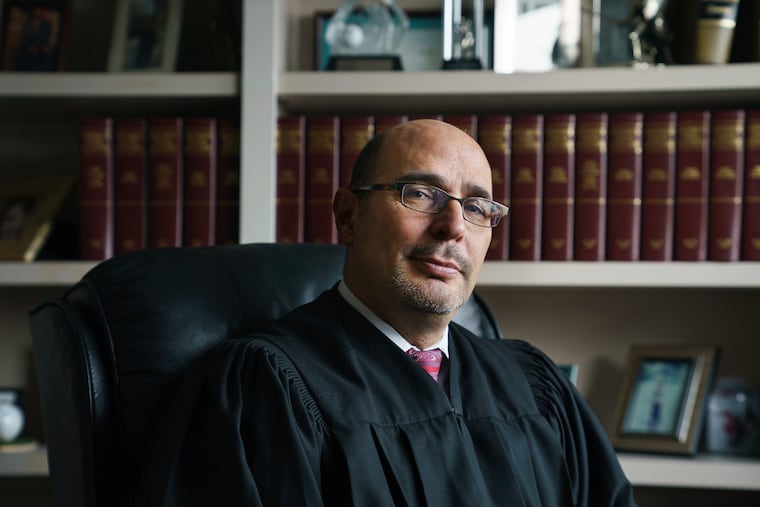
Philly Judge Scott DiClaudio denies attempting to influence a case, but a colleague disputes his statement.
In a notable case unfolding within Pennsylvania’s judicial system, Judge Scott DiClaudio of the Philadelphia Common Pleas Court has come under scrutiny following allegations of ethical misconduct related to a criminal case. The charges, which have prompted a suspension from the bench, stem from DiClaudio’s purported attempt to influence a colleague’s judicial decision regarding a defendant, Dwayne Jones, who is linked to the Philadelphia rap scene and has connections to the judge.
During a recent hearing before the Pennsylvania Court of Judicial Discipline, DiClaudio posited that the accusations against him resulted from a significant misunderstanding regarding an interaction with fellow Judge Zachary Shaffer. The allegations arose after a conversation that took place in June when Shaffer visited DiClaudio’s courtroom. According to DiClaudio, he merely conveyed to Shaffer that he had met Jones at a public event and offered a compliment about Shaffer’s qualifications as a judge.
Contrastingly, Shaffer interpreted the interaction as an attempt on DiClaudio’s part to exert influence over the outcome of Jones’ sentencing. Shaffer expressed his concerns, citing that the conversation was explicit in its implication of expecting a favorable result for Jones. These conflicting narratives were presented publicly for the first time during the Harrisburg hearing, where DiClaudio faces formal charges from the state Judicial Conduct Board.
This investigation has drawn significant attention, as it entails accusations that the judiciary has been brought into disrepute. The Judicial Conduct Board has sought to revoke DiClaudio’s salary while the case is being adjudicated.
Key details from the hearings included contrasting testimonies regarding the nature of DiClaudio’s interaction with Shaffer. Shaffer indicated that upon entering DiClaudio’s chamber, he was presented with notes referencing Jones’ case. This raised concerns for Shaffer, who reported the conversation to his superior the following day, prompting an inquiry that has garnered the involvement of federal authorities.
Elizabeth Hoffheins, a deputy counsel for the judicial conduct board, articulated that DiClaudio’s interaction with Jones was strategically motivated by their social connections, which she argued had the potential to cast a long shadow over the integrity of the judiciary. Additionally, Hoffheins remarked that the situation necessitated a suspension without pay for DiClaudio pending further investigations.
Throughout the hearings, DiClaudio displayed moments of agitation, and his defense attorneys argued for his reputation as a respected judge, contending that he never sought to alter any judicial decisions. The five-member disciplinary panel is expected to deliberate on whether DiClaudio will remain suspended without pay while further evaluations occur. The outcome of this case not only affects DiClaudio’s future on the bench but also poses significant implications for public trust in the judicial process in Pennsylvania.