Philly shipyard owner hires former Trump aide to gain insights on immigration and investment issues.
Alex N. Wong, a former senior adviser on national security to President Donald Trump, has been appointed as the global chief strategy officer for Hanwha, a South Korean multinational industrial group. This strategic move comes in the backdrop of Hanwha’s recently announced commitment to invest billion in expanding its Philadelphia shipyard. This investment is part of a broader initiative by South Korean industries aimed at modernizing and revitalizing U.S. manufacturing capabilities.
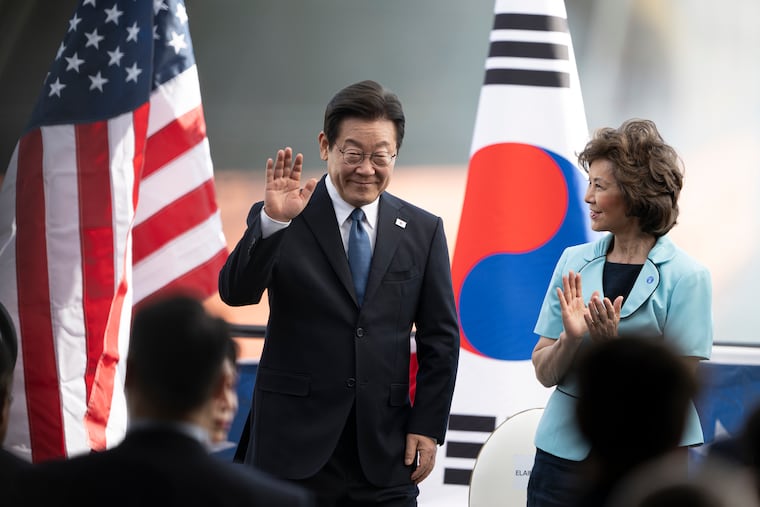
The announcement follows a high-profile visit from South Korean President Lee Jae Myung, who engaged in discussions with Trump to foster extensive Korean investment in the American industrial landscape. However, the context surrounding this investment has been complicated by recent immigration enforcement actions in Georgia, where U.S. Immigration and Customs Enforcement arrested numerous engineers and technicians involved in constructing a Hyundai and LG battery factory. This operation sparked considerable backlash in South Korea and raised concerns regarding the potential for similar actions against Korean contractors in Philadelphia and other U.S. cities.
Wong’s role at Hanwha will involve overseeing defense, shipbuilding, and aerospace strategies, and the company emphasized his established connections within the U.S. military-industrial sector. His extensive experience at senior levels of international security and alliance-building is expected to enhance Hanwha’s collaboration with U.S. partners, promoting deeper cooperation in defense and technology.
In a statement about Wong’s hire, Hanwha Group Vice Chairman Dong Kwan Kim highlighted the significance of Wong’s expertise in elevating the firm’s engagements with allies across the U.S. and Europe. Wong himself expressed a commitment to bolster the security and industrial resilience of the U.S. and allied nations through Hanwha’s initiatives.
Despite these optimistic projections, the recent arrests in Georgia have left many in the South Korean business community questioning the stability of investment in the U.S. Wong’s leadership is seen as essential in reassuring stakeholders about the company’s commitment to compliance within the U.S. immigration system. The Hanwha shipyard in Philadelphia currently produces approximately one vessel every eight months, but the company aims to drastically increase its output to over ten ships annually with the new investment.
The geopolitical implications of Hanwha’s expansion and the surrounding circumstances highlight the delicate balance between fostering foreign investment and addressing domestic immigration and labor policy concerns. As the U.S. navigates its relationship with South Korea and seeks to enhance its shipbuilding industry, the eyes of global markets remain fixed on developments stemming from this partnership. This expansion not only signifies a significant economic opportunity for Philadelphia but also presents challenges in aligning immigration policies with international investment strategies.
This unfolding narrative encapsulates broader themes of globalization, national security, and workforce development, positioning Hanwha at the intersection of economic ambition and international collaboration.