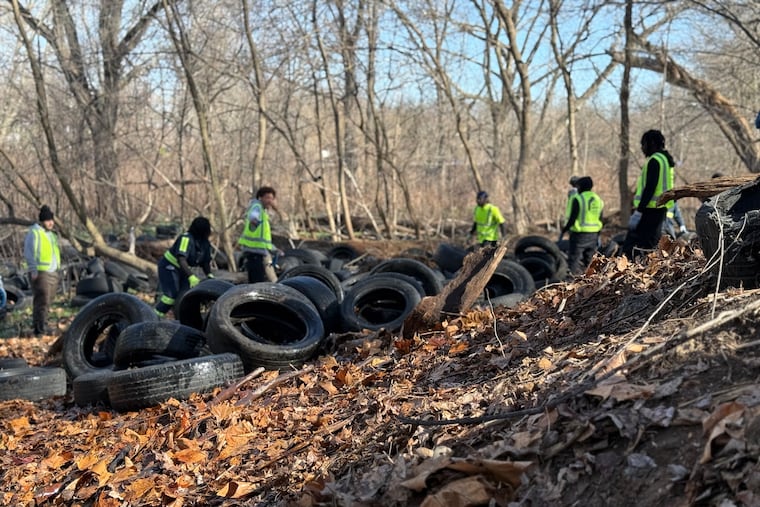
Philly’s Clean and Green office seeks extensive network of surveillance cameras to identify and deter illegal dumping activities.
In a recent proposal, Philadelphia Mayor Cherelle L. Parker is requesting 0 million for the Office of Clean and Green Initiatives. This funding is intended to cover increased sanitation labor costs, the expansion of trash collection services to twice a week, and a new network of surveillance cameras aimed at curbing illegal dumping across the city.
However, during a City Council budget hearing, discussions primarily centered around the renewal of a contract with the Reworld Delaware Valley Resource Recovery Facility, a trash-to-energy incinerator located in Chester. Councilmember Jamie Gauthier expressed her opposition to the continued use of this facility, citing its detrimental impact on the heavily polluted Chester City. Gauthier has also introduced the “Stop Trashing Our Air Act,” a proposal designed to prohibit the city from incinerating waste altogether.
Currently, approximately 37% of Philadelphia’s refuse is incinerated, which, according to Gauthier, is considered substantially more harmful for the environment compared to traditional landfill disposal. An independent study indicated that incinerating waste at the Chester facility has a climate impact that is 69% worse than landfill disposal and poses 23 times greater health risks.
The proposed budget for the Clean and Green Initiatives marks an approximately 2.1% increase over the current fiscal year. This increase, however, represents a million surplus over the previously approved 0 million budget. The changes are attributed to rising costs associated with labor and waste disposal.
The Office of Clean and Green Initiatives, established by Parker, encompasses various city departments, including the Department of Sanitation and the Community Life Improvement Program (CLIP). Each segment focuses on addressing issues like graffiti, vacant lots, and illegally dumped waste. The office’s plans include bolstering the city’s capabilities to combat illegal dumping through enhanced surveillance measures. Currently, the city has deployed 400 surveillance cameras and is set to add 100 more to monitor hotspots for illegal dumping activities.
Efforts to increase penalties for illegal dumping are also on the agenda. Councilmember Curtis Jones Jr. has urged for stricter fines, suggesting that the financial deterrents must make illegal dumping a less appealing option for violators.
In addition to addressing illegal dumping, the budget proposal includes plans to expand trash collection services to meet the needs of neighborhoods identified as litter-prone. The city has already initiated double pickups in select areas, aiming to alleviate residents’ challenges in managing waste.
As Philadelphia plans its approach to sustainability and hygiene, funding and policy decisions in these areas remain critical in addressing the complex challenges of urban waste management.
Media News Source