Philly’s local authority faces challenges in regulating federal agents from ICE amid ongoing tensions and enforcement practices.
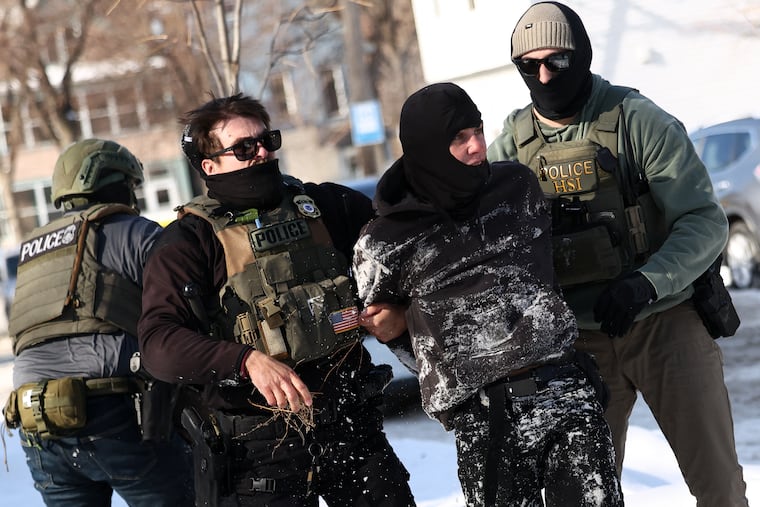
In a significant move within Philadelphia’s legislative landscape, city lawmakers are preparing to pass a new law that would prohibit all law enforcement officials, including federal Immigration and Customs Enforcement (ICE) agents, from concealing their identities with masks or conducting operations from unmarked vehicles. This proposed legislation stems from growing concerns among immigrant advocates who argue that such practices have contributed to a climate of fear and intimidation within communities.
The use of masks by ICE agents has evolved into a contentious issue, often described by immigration advocates using terms such as “kidnappings” and “abductions.” Critics assert that the federal agency’s practices involve agents dressed in plainclothes and employing tactics like jumping out of unmarked vehicles to apprehend individuals, making it difficult for those targeted to ascertain the identity of the officers. Recent arrests in Philadelphia, where several individuals impersonated ICE agents, have only heightened these concerns.
As Philadelphia City Council considers the bill, significant legal challenges loom. Constitutional experts note that municipalities generally lack the authority to interfere with federal operations, a stance supported by the Trump administration during its tenure. The administration has indicated that regulations imposed by local jurisdictions could conflict with the supremacy clause of the Constitution, which states that federal law prevails.
Despite these hurdles, advocates argue for the necessity of such legislation to enhance public safety and accountability within law enforcement. Proponents of the bill claim that officers failing to identify themselves are operating contrary to their mandated responsibilities to carry badges. Moreover, they emphasize that the issuance of masks can lead to incidents of impersonation, thus jeopardizing community trust and safety.
The legislative proposal is part of a broader set of measures designed to limit ICE’s operations within city limits. Despite potential opposition, the City Council appears to have garnered substantial support, with fifteen out of seventeen members signing on to the proposal, indicating a desire to advance these protections for Philadelphia’s residents. Nonetheless, practical enforcement of a mask ban remains complex. Violations would be classified as civil infractions, placing local police in the position of enforcing the law upon their federal counterparts.
The significance of this legislative effort is amplified by similar initiatives across the United States, indicating a burgeoning national movement against the operational methods of ICE. Public sentiment appears to favor a ban on mask-wearing by federal agents, as a recent Pew Research Center survey revealed that 61% of Americans oppose the practice.
As Philadelphia navigates this contentious territory, the dynamics of federalism and local governance will be put to the test, with the outcomes potentially reshaping public perceptions of law enforcement within immigrant communities. The upcoming days may prove critical as the city moves closer to enacting this legislation while preparing for the challenges that lie ahead.
The implications of this bill extend beyond Philadelphia, as discussions regarding federal immigration enforcement and its intersection with local policies continue across various states, reflecting an ongoing debate on the limits of governmental power and community safety.