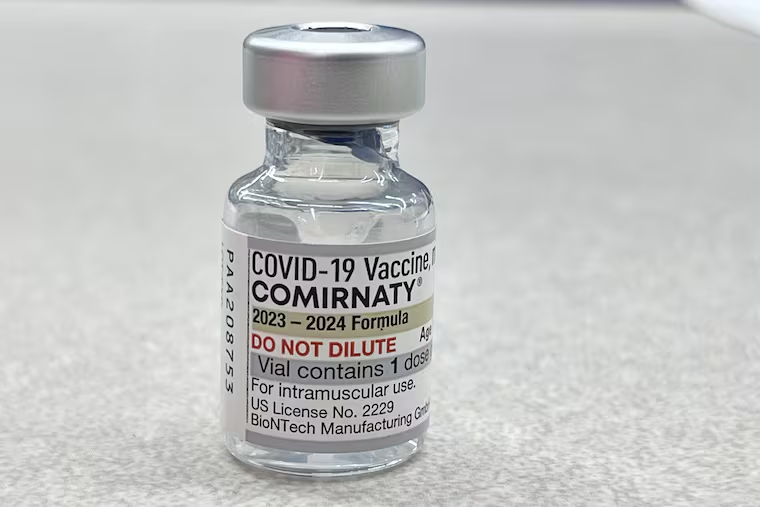
Robert F. Kennedy Jr.’s vaccine advisers discuss recommendations for COVID-19 vaccinations.
ATLANTA — The issue of accessibility to COVID-19 vaccines has emerged as a significant point of concern, particularly as Health Secretary Robert F. Kennedy Jr. convenes the vaccine advisers once again to address this matter. The advisers, who are part of the Centers for Disease Control and Prevention (CDC), recently postponed a controversial vote regarding a vaccine for newborns, further complicating the ongoing dialogue about immunizations.
Many individuals throughout various states are expressing frustration as they navigate the complex process of determining their eligibility for the updated COVID-19 vaccines. This comes at a time when reported infections have seen an uptick over the past month, intensifying the public’s anxiety regarding vaccine access.
The Food and Drug Administration (FDA) has recently implemented new restrictions concerning this year’s vaccine allocations from Pfizer, Moderna, and Novavax. These restrictions limit access primarily to individuals aged 65 and older, as well as younger individuals identified as being at a higher risk for severe outcomes related to the virus. The advisory committee’s forthcoming recommendations on vaccine eligibility hold substantial implications for insurance coverage and the administration of vaccines by pharmacists across various states.
There remains uncertainty about whether the CDC’s Advisory Committee on Immunization Practices will propose any further restrictions. This committee, characterized by its composition of members skeptical of coronavirus vaccinations, is under scrutiny as public health officials await its recommendations.
Dr. Phil Huang, a family physician and director of the Dallas County health and human services department, notes the mounting confusion this situation is causing among the public, particularly for low-income families reliant on federally funded health programs for vaccination access.
In addition to the COVID-19 vaccine deliberations, the advisory panel addressed another pressing issue: the longstanding recommendation that all newborns receive the hepatitis B vaccine at birth. After deliberation, the committee opted to postpone a decision regarding the potential adjustment of this guideline, despite ongoing concerns about its implications for infant health.
On another front, the committee has recommended a change concerning the measles, mumps, rubella, and chickenpox vaccines for children under the age of four, advising that these should be administered as separate injections rather than in a combined form. This follows a historical preference for separate vaccinations articulated by the CDC since 2009, a practice already adopted by 85% of toddlers.
As the advisory committee continues to navigate the complexities surrounding vaccine distribution and guidance, leading medical organizations like the American Academy of Pediatrics have voiced recommendations advocating for universal access to COVID-19 vaccinations for individuals aged six months and older. In anticipation of potential barriers stemming from recent recommendations, several states have pledged to ensure vaccine availability regardless of the advisory committee’s decisions. Insurance providers have also indicated their commitment to covering vaccine costs through 2026, which may serve to alleviate some of the emerging concerns regarding vaccine accessibility and public health.
Reports indicate that COVID-19 remains a significant public health threat, contributing to an estimated 32,000 to 51,000 deaths and over 250,000 hospitalizations in the United States during the previous fall and winter seasons, predominantly among unvaccinated seniors and young children. As these discussions unfold, both health officials and the community at large are keenly attuned to their implications for public health and safety.
Media News Source