Rubio emphasizes the importance of U.S. and Europe unity, despite existing disagreements over Trump’s policies.
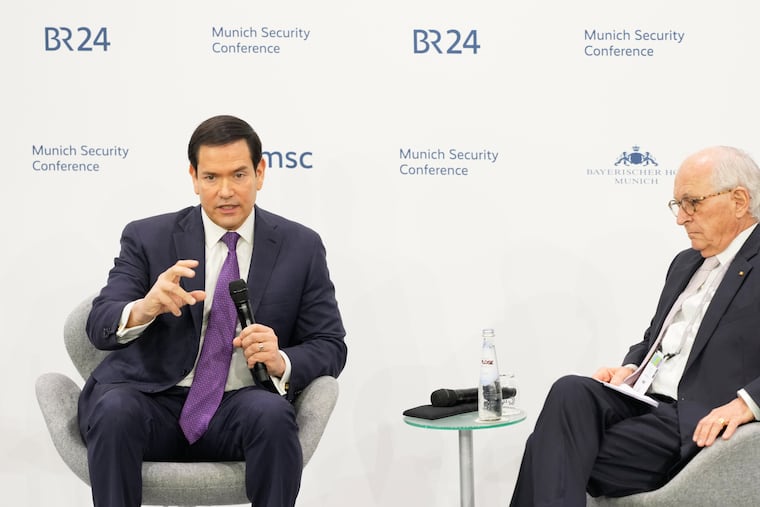
MUNICH — In a recent keynote address at the annual Munich Security Conference, Secretary of State Marco Rubio emphasized the importance of unity between the United States and Europe, stating that the two regions are intrinsically linked. His speech sought to reinforce the foundations of the Western alliance while articulating a critique of globalization, open borders, and mass migration, positioning these issues as significant challenges facing both continents.
Rubio’s remarks resonated with an audience of European leaders, many of whom have expressed concerns over increased political divisions exacerbated by the previous administration’s policies, including punitive tariffs and contentious foreign strategies. As European leaders grapple with the aftermath of President Trump’s tenure, Rubio’s message offered a moment of reassurance, a contrast from the previous year’s events when Vice President JD Vance’s speech drew criticisms for its dismissive tone regarding Europe.
Highlighting the historical and cultural bonds that tie the U.S. and Europe together, Rubio invoked shared values and sacrifices throughout history. Yet, his presentation also included support for several contentious Trump administration policies that have elicited skepticism from European allies. These included skepticism towards initiatives aimed at reducing carbon emissions, criticism of the United Nations, and an endorsement of unilateral military actions. He positioned the UN as ineffective in addressing significant global challenges, which raised eyebrows among European diplomats who view the organization as vital for international cooperation.
The conference represented a critical moment for Europe, as leaders from across the continent reiterated their determination to rethink the longstanding relationship with the U.S. European Commission President Ursula von der Leyen underscored the need for Europe to enhance its autonomy in global affairs, asserting that the continent must take proactive measures to secure its interests without over-reliance on the U.S.
As discussions unfolded, leaders emphasized the necessity for Europe to navigate its own defense strategies, especially amidst a world increasingly characterized by great power competition, including rising tensions with China and ongoing conflicts in Ukraine. French President Emmanuel Macron articulated a vision for a more independent Europe, advocating for a balanced approach that also seeks to reduce dependency on major global powers, including the U.S.
British Prime Minister Keir Starmer echoed these sentiments by calling for reinforced ties between the UK and Europe, suggesting that collaboration will enable a more robust defense posture while fostering economic interdependence.
Despite Rubio’s efforts to mend relations, the cautious atmosphere remained palpable. European leaders are acutely aware that challenges persist, particularly related to geopolitical negotiations and the implications of the U.S. administration’s fluctuating policies. As a recent meeting on Greenland highlights, relations will require delicate navigation going forward. Danish Prime Minister Mette Frederiksen revealed ongoing concerns about U.S. intentions regarding the Arctic region, emphasizing the need for respect for Greenland’s sovereignty.
Overall, the Munich Security Conference served as a pivotal platform for reassessing transatlantic relations in an era defined by uncertainty and evolving geopolitical dynamics, revealing both the opportunities and challenges that lie ahead for Europe and the United States in the pursuit of a united front in global affairs.
Media News Source