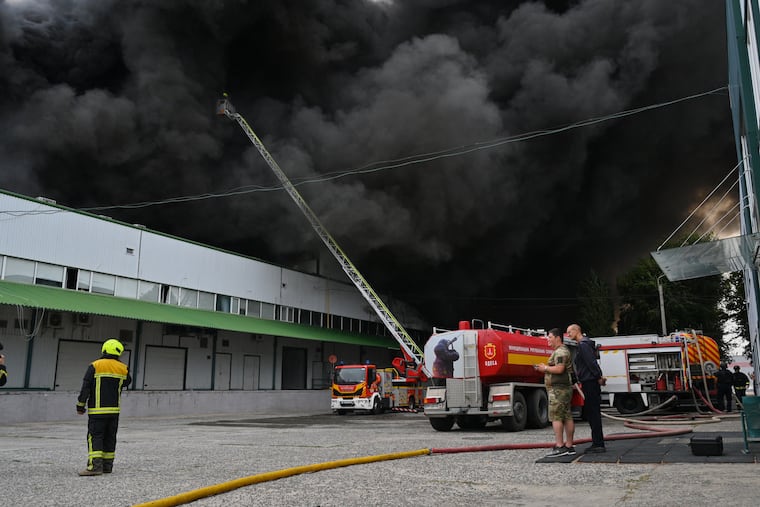
Russia intensifies efforts against Ukraine’s economy amid ongoing battlefield challenges.
Kyiv, Ukraine — The ongoing conflict between Russia and Ukraine has now evolved beyond military engagements to significantly impact the economic landscapes of both nations. As hostilities continue, economic warfare has become a central strategy, with military operations increasingly targeting economic assets to induce disruption, unemployment, and logistical bottlenecks.
Ukrainian authorities have characterized the current phase of the Russian campaign as “total war,” emphasizing its primary focus on crippling Ukraine’s economy rather than securing limited military objectives. While Moscow has targeted Ukrainian commercial enterprises throughout the conflict, the scope and scale of these attacks have intensified considerably in recent months.
In retaliation, Ukraine has focused on diminishing Russia’s economic output, utilizing its growing array of indigenous drones to inflict damage on critical sectors such as the oil industry, which represents a cornerstone of the Russian economy. This escalation in drone strikes has not only aimed at tactical military runs but also at striking at the economic underpinnings of the adversary.
As military advancements have largely stalled for Moscow, the Kremlin has increasingly resorted to targeting Ukraine’s economic infrastructure. This shift aims to raise the costs for Europe in supporting Ukraine’s defense efforts. Economic expert Orysia Lutsevych from Chatham House has highlighted the implications of this approach, suggesting it could fuel dissent within Europe against further financial aid to Ukraine, particularly as inflation mounts.
Ukrainian President Volodymyr Zelensky recently underscored the urgency of the economic situation, noting a necessity for billion to cover budget deficits, coming on the heels of a substantial European Union loan earlier this year.
Analysts estimate that the cumulative economic impact of the Russian offensive could reach around billion by the end of this year. Much of this economic toll is indirect, manifesting as reductions in sales, disrupted labor supply, and impeded logistics.
In parallel, the European Bank for Reconstruction and Development announced a downward revision of Ukraine’s economic growth forecast from 2.2% to 1.5% for the current year, with some economists predicting zero growth as a realistic outcome. Meanwhile, the Russian economy faces its own hurdles, grappling with a mounting federal budget deficit that reached billion by August, significantly surpassing initial projections for 2023.
The broader implications of this strained economic situation are reflected in the everyday challenges faced by citizens and businesses in both countries. In Ukraine, for instance, attacks on supply chains and infrastructure have crippled logistics, creating shortages and stalling trade. Conversely, the Russian government’s attempt to suppress visible signs of economic distress in far-flung regions has faltered under the pressure of Ukrainian retaliatory strikes.
As hostilities show no signs of abating, a significant concern remains: consumer spending power, bolstered by robust military salaries in Ukraine, is set against the backdrop of an economic landscape under siege. While Ukraine is not currently facing a famine, the continuing conflict threatens to stifle economic activity, reducing the fiscal capacity to further fund military operations.
The evolving war dynamics have led many businesses to reconsider their operational strategies. As exemplified by the Kyiv-based company Good Wine, businesses are innovating logistics solutions to mitigate damage. After suffering losses due to airstrikes, firms now explore decentralized storage solutions and even underground facilities to safeguard assets against future assaults.
The war’s persistent nature has compounded existing challenges, leading entrepreneurs to confront escalating costs and operational hurdles in a transformed market landscape. As Ukraine continues to defend against aggression while managing its economic viability, the repercussions of this conflict extend far beyond the battlefield, reverberating through both nations’ economic frameworks.
The rapidly shifting economic dynamics highlight the intricate interplay of warfare and modern economic strategy, paving the way for a prolonged confrontation that demands resilience from both governments and their citizens.
Media News Source