Schools are adopting AI technology to assist students in learning French, editing papers, and enhancing various educational experiences.
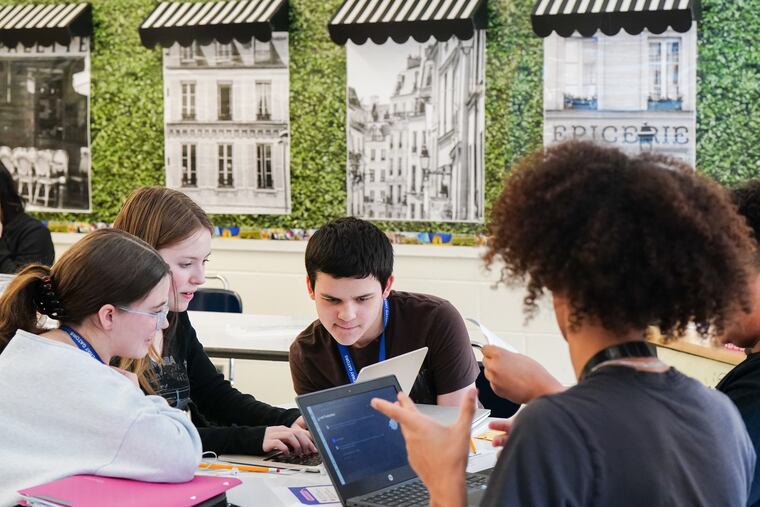
In Gateway Regional High School, students are embracing artificial intelligence (AI) tools to enhance their learning experience. Freshman Spencer Barrett exemplifies this integration during his French class, where he utilizes a headset and laptop to engage with a chatbot focused on language practice. As part of a class exercise, Barrett interacts with the AI by responding to questions connected to everyday scenarios, such as grocery shopping, thereby improving his conversational skills in French.
Gateway Regional is part of a broader trend among New Jersey school districts exploring AI’s educational applications. Kim Karwoski, a seasoned French teacher with 15 years of experience, has noted that the use of chatbots has significantly streamlined her teaching process. This technology not only alleviates some of the burdens associated with workload management but also provides targeted support for students requiring additional assistance.
The New Jersey Department of Education is advocating for the adoption of AI in classrooms, with Commissioner Kevin Dehmer highlighting it as a pivotal element for the future of education. Earlier this year, the state allocated .5 million in grants to Gateway and nine other districts, facilitating the advancement of AI educational programs. Each school received a grant of ,000 aimed at fostering innovative teaching methods.
Despite the opportunities presented by AI, educators are acutely aware of the challenges, including concerns about academic integrity and the potential for spreading misinformation. Jennifer Garner, Senior Director of Innovative Learning at the International Society for Technology in Education, emphasizes the necessity of establishing guidelines to protect student privacy and ensure that AI is utilized effectively.
Other districts, such as Cherry Hill, are in the early stages of integrating AI into their curricula, acknowledging both its potential benefits and inherent risks. Similarly, the Philadelphia School District has initiated a pilot program in collaboration with the University of Pennsylvania, aimed at training educators to harness AI’s capabilities in urban schools.
In the context of these developments, Gateway school officials have started implementing AI thoughtfully, creating comprehensive guidelines for its use. Students are permitted to interact with AI’s generative platform only under teacher supervision, ensuring that they understand it as a supportive tool rather than a crutch.
As AI usage continues to proliferate among high school students—recent studies suggest that the number of teenagers using tools like ChatGPT for academic tasks has doubled in the past year—educators are keen on developing lessons that maintain traditional learning methods while seamlessly incorporating modern technology. This dual approach will help students navigate the evolving digital landscape critically and effectively, preparing them for the future.