SEPTA receives million funding for diesel-electric hybrid buses from federal government.
Since assuming office for his second term, President Trump has actively sought to curtail federal tax incentives and funding for the clean-energy sector, opting instead to emphasize the expansion of oil and natural gas production. However, recent developments suggest that the federal government is still maintaining a presence in the clean transportation arena.
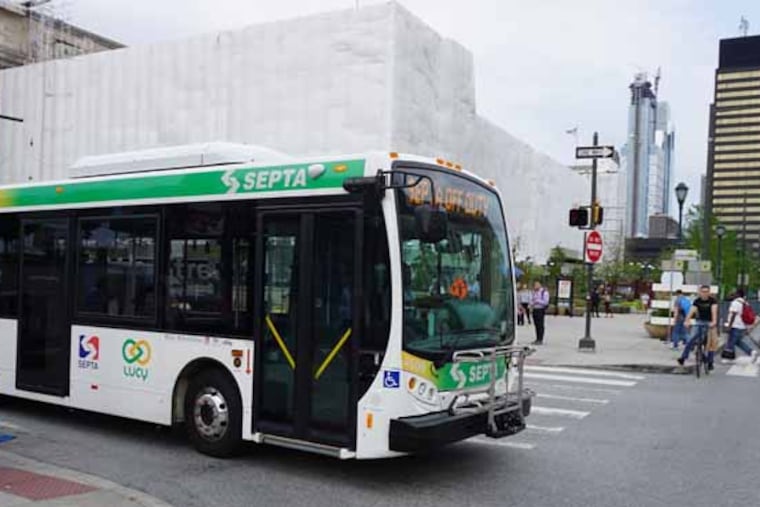
In a notable move, SEPTA (Southeastern Pennsylvania Transportation Authority) has been awarded a million grant from the Federal Transit Administration (FTA) to facilitate the transition from 35 diesel-powered buses to an equivalent number of cleaner diesel-electric hybrid buses. The new buses will measure 32 feet in length, a slight reduction from the 30-foot diesel units they will replace.
This funding is part of the FTA’s Bus Low- and No-Emission grant program, which aims to promote the adoption of environmentally friendly public transportation technologies. With the arrival of the new buses anticipated by 2028, SEPTA’s fleet will become entirely devoid of diesel-burning vehicles.
Currently, most buses within the SEPTA network are larger models, including 40-foot and 60-foot articulated buses. The newly procured hybrids are expected to operate primarily on specific routes, including the LUCY Loop in University City, as well as routes 310, 311, 312, and 204, which extends from Eagleville to Paoli Station.
General Manager Scott Sauer stated that the introduction of these hybrid buses is poised to enhance operational efficiency, thereby ensuring that SEPTA continues to deliver reliable services to its customer base. SEPTA initiated the grant application process in July, a timely effort in line with ongoing federal infrastructure objectives.
U.S. Representative Brendan Boyle, who represents Philadelphia, touted the grant as a significant victory for the city, highlighting that the new hybrid buses will contribute to more reliable transit service and improved air quality for the thousands of residents who rely on SEPTA daily. The funding originates from President Biden’s bipartisan infrastructure law, which Boyle actively supported.
Furthermore, U.S. Transportation Secretary Sean P. Duffy commented on the broader implications of the funding, noting that enhanced bus infrastructure exemplifies the government’s commitment to revitalizing American transportation under Trump’s administration. As part of the fiscal year 2025 federal budget, a total of .1 billion was allocated for similar projects nationwide, with an additional 8 million earmarked for the low- and no-emission bus grant program in fiscal 2026.
In summary, while the current administration may have de-emphasized clean energy, significant federal investment in low-emission public transportation suggests a nuanced approach towards sustainable transit solutions. Media News Source.