Service honoring Absalom Jones carries additional significance for his church this year.
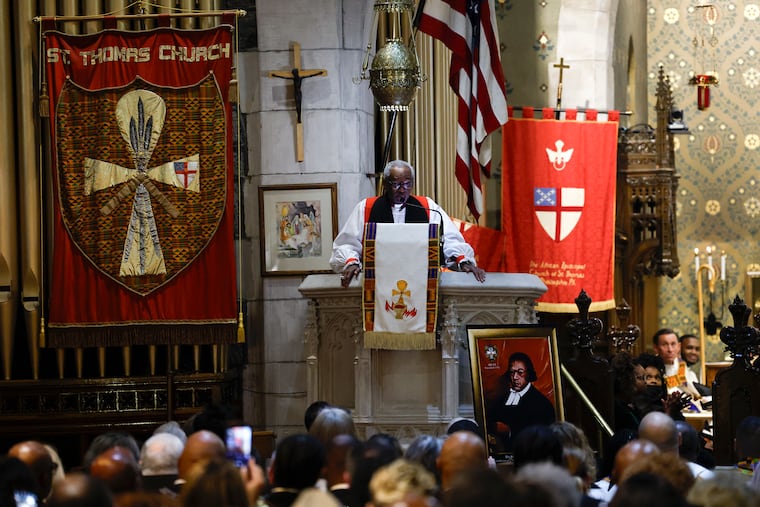
The African Episcopal Church of St. Thomas recently hosted its annual celebration honoring the legacy of Rev. Absalom Jones, the first Black ordained Episcopal priest in the United States. This year’s event, held at the church located in Overbrook Farms, carried additional significance in light of recent political developments surrounding the historical recognition of African American figures.
The service, which attracted a large congregation, took place against the backdrop of the National Park Service’s recent decision to dismantle an exhibit at the President’s House historical site in Independence Mall. This exhibit had acknowledged the lives of nine enslaved individuals who lived at the nation’s first presidential mansion. The display chronicled the Atlantic slave trade and also highlighted the contributions of early Black Philadelphians, including Jones and Richard Allen. The decision to remove these exhibits is largely attributed to the policies enacted during the Trump administration, aimed at removing content deemed critical of American historical narratives, raising concerns about the potential erasure of the brutality of slavery from public discourse.
The sermon delivered by Rt. Rev. Michael Curry, a prominent Episcopal leader and the first African American presiding bishop of the Episcopal Church, addressed various contemporary societal issues. His message encompassed topics ranging from the cultural impacts of celebrity events, such as Bad Bunny’s Super Bowl halftime show, to ongoing civil unrest sparked by immigration enforcement policies. Despite these challenges, Curry’s central message resonated with themes of resilience and the importance of striving for justice and equality.
Highlighting the historical narratives of Jones and Allen, Curry emphasized the ongoing struggle for freedom, justice, and inclusivity for all individuals in America. His poignant remarks called upon congregants to actively engage in shaping a more equitable society, urging them not to give in to despair but to remain steadfast in their efforts for change.
The service featured performances by young singers from Minnesota and included participation from notable faith leaders across Philadelphia, along with descendants of Rev. Allen. This communal aspect underscored the enduring legacy of Jones and Allen, who, after being marginalized in their own faith communities, established their own parishes to serve Black congregants.
As this erasure of history unfolds, particularly in the lead-up to the nation’s Semiquincentennial celebrations, city officials have begun legal proceedings to oppose the removal of the exhibits, labeling the action as unlawful. A federal judge has ordered that the removed materials be safeguarded during the ongoing court proceedings, signaling the significance of preserving historical narratives.
Rev. Martini Shaw, rector of St. Thomas, articulated the sentiment shared by many attendees: while there are efforts to revise history, the church remains committed to celebrating the impactful contributions of figures like Absalom Jones. This year’s service not only commemorated a pivotal figure in religious history but also underscored the ongoing relevance of his legacy in the pursuit of equity and justice within society.
This renewed emphasis on historical acknowledgment represents a broader movement within communities to resist the erasure of important narratives and to honor the lives of those who fought against systemic oppression. As discussions around social justice and historical recognition gain prominence, the celebration of such figures serves as a reminder of the work that remains to achieve equality for all.
Media News Source