
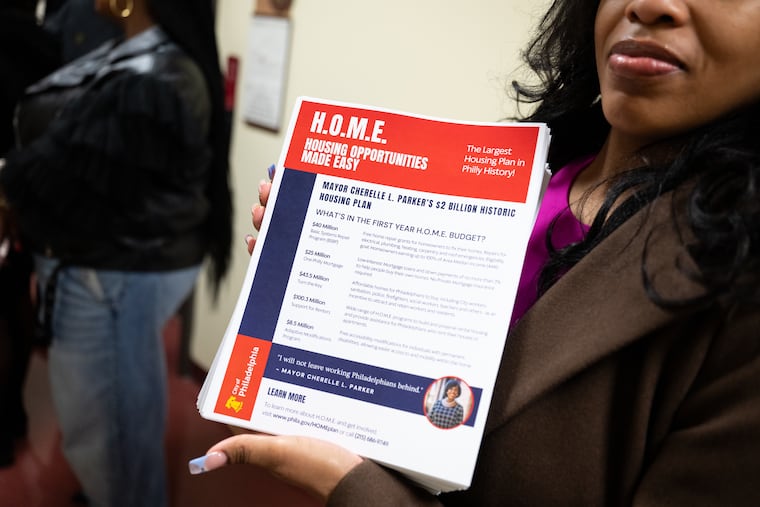
Shapiro secures agreement, Council implements strict oversight, and Parker initiates H.O.M.E. debate ahead of the holiday season.
This week, the focus shifts to Philadelphia’s ongoing housing initiatives, the intricate dynamics surrounding outdoor dining permissions, and Governor Josh Shapiro’s emerging reputation as a skilled negotiator.
Initially, Mayor Cherelle L. Parker’s substantial billion proposal aimed at constructing or refurbishing 30,000 homes appeared to foster consensus among city officials. However, the proposal has encountered significant hurdles, especially concerning proposed expansions of income eligibility limits for programs aimed at helping residents with essential repairs and modifications to their homes. This controversy has ignited an escalating verbal battle between the Parker administration and the City Council.
Throughout her campaign, Parker has actively promoted her housing plan in various community venues, including places of worship. In her outreach, she has framed the Council’s position as one that is insufficiently supportive of constituents who are both “paying up and praying up.” In contrast, many Council members have pushed back, insisting that their primary goal is to prioritize those in the greatest need.
While discussions continue, it is essential to note that both Parker and City Council’s plans propose income level expansions, with a significant portion of the anticipated benefits designed for individuals earning less than 60% of the area median income. Instead of focusing the discourse on income levels, the mayor could have advocated for more market-rate construction outside of heavily populated areas like Center City. Angela Brooks, the city’s chief housing officer, published an article for the National League of Cities making this very case, citing a report indicating an overall shortage of housing in Philadelphia.
However, much of Parker’s Housing Opportunities Made Easy (H.O.M.E.) initiative prioritizes demand-side solutions, which, while beneficial to individual households, may not adequately address the broader issue of rapidly rising housing costs that affect countless families across various income brackets.
In another area, Philadelphia’s tradition of councilmanic prerogative affords district Council members total discretion over land use matters, impacting both significant civic projects and minor operational concerns such as the permitting of outdoor dining spaces for restaurants. The pandemic prompted City Council to assess outdoor dining more favorably, leading to the creation of certain areas with streamlined procedures. Yet, even this simplified approach still mandates substantial insurance requirements and lengthy approval processes.
At-Large Councilmember Rue Landau has taken initiative to broaden these more lenient zones, allowing greater freedom for restaurants. Nevertheless, the time-consuming approval process remains a competitive obstacle for eateries outside of these designated areas.
Finally, despite some ripple effects of this new legislation, dissent has emerged. Councilmember Cindy Bass, known for her staunch exercise of prerogative, asserted her authority over the changes proposed by Landau, illustrating the tension within the Council.
In the state government sphere, after a notable four-month stalemate regarding the state budget allocations, Governor Shapiro recently reaffirmed his role as a capable mediator. Successfully brokering a deal between SEPTA and the Transport Workers Union Local 234, the governor helped avert a potential strike that could have significantly disrupted public transport. This marks Shapiro’s third intervention with SEPTA, underlining his growing profile as a dealmaker, even as questions arise about the efficacy of labor negotiations under current leadership at the agency.
As Philadelphia navigates its multifaceted challenges, the interplay between local governance, community needs, and state advocacy will undoubtedly shape the future landscape of the city’s social and economic fabric.
Media News Source.


