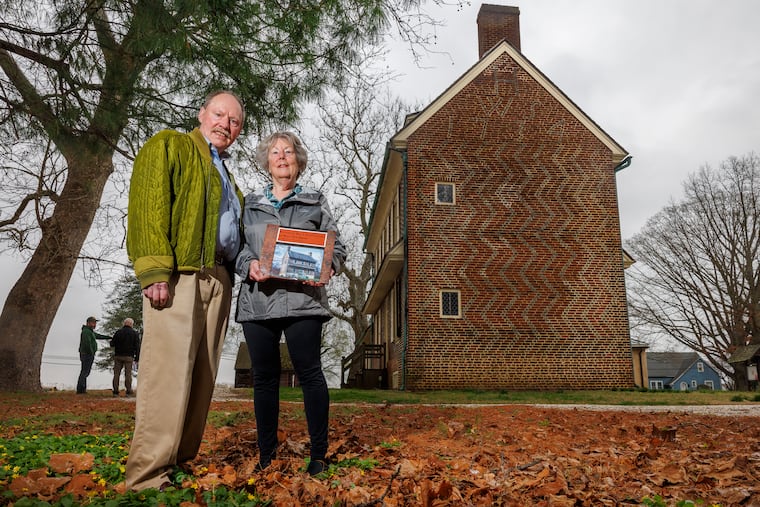
South Jersey Recognized as the Leading Region for Patterned Brick Architecture in the United States
The unique architectural legacy of patterned brick farmhouses in South Jersey is garnering renewed interest thanks to the publication of a comprehensive study by historian Robert L. Thompson. His book, “Patterned Brick Architecture of West New Jersey,” released in 2023 by the South Jersey Culture & History Center at Stockton University, explores the historical significance of these striking 18th-century constructions, which stand out for their intricate geometric designs made from contrasting colored bricks.
Over the course of five years, Thompson extensively documented approximately 40 patterned brick houses across South Jersey, notably in Camden, Burlington, Gloucester, and Salem counties. These areas are home to at least 107 of these distinctive structures, more than any other region in the United States. The book features not only photographs of these homes but also delves into the historical context that led to their proliferation. The exploration of these intricately designed buildings comes at a pivotal time, coinciding with the upcoming 250th anniversary of the Declaration of Independence, which aims to elevate public awareness of Revolutionary War-era architecture in the region.
Patterned brick architecture holds significant historical and aesthetic value, representing a unique style that contrasts with the more conventional building practices of the era. Paul W. Schopp, the center’s assistant director and editor of the book, highlights the exuberant nature of these structures, noting that they challenge the conventional image of Quakers as modest and reserved individuals. Thompson’s research underscores the fact that many of these houses were constructed by affluent Quaker farmers who capitalized on the region’s abundant clay resources to create detailed brickwork, often featuring initials of the original owners and significant dates.
The geographical concentration of these buildings can be attributed to several factors, including the fertile clay deposits of South Jersey and historical events such as the great fire of London in 1666. This fire led to new building regulations mandating the use of brick and stone, thereby creating an influx of skilled craftsmen who eventually emigrated to the New Jersey area to set up their trades. According to Thompson, the confluence of geography, economics, and community dynamics facilitated the rise of this unique architectural form.
As interest in patterned brick structures grows, there is concern regarding their preservation. Experts like Bob Craig, an advocate for the protection of historic buildings, stress the need for active preservation efforts, urging local communities to recognize the cultural significance of these architectural gems. As the region prepares for its part in commemorating America’s Revolutionary past, the preservation of these historically rich structures remains imperative for future generations to appreciate and understand the intricate narratives they embody.
With ongoing projects, including digital visitor guides that aim to highlight these important historical sites, there is hope that both appreciation and proactive measures to protect these architectural treasures will take shape, ensuring their legacy endures well into the future.
Media News Source